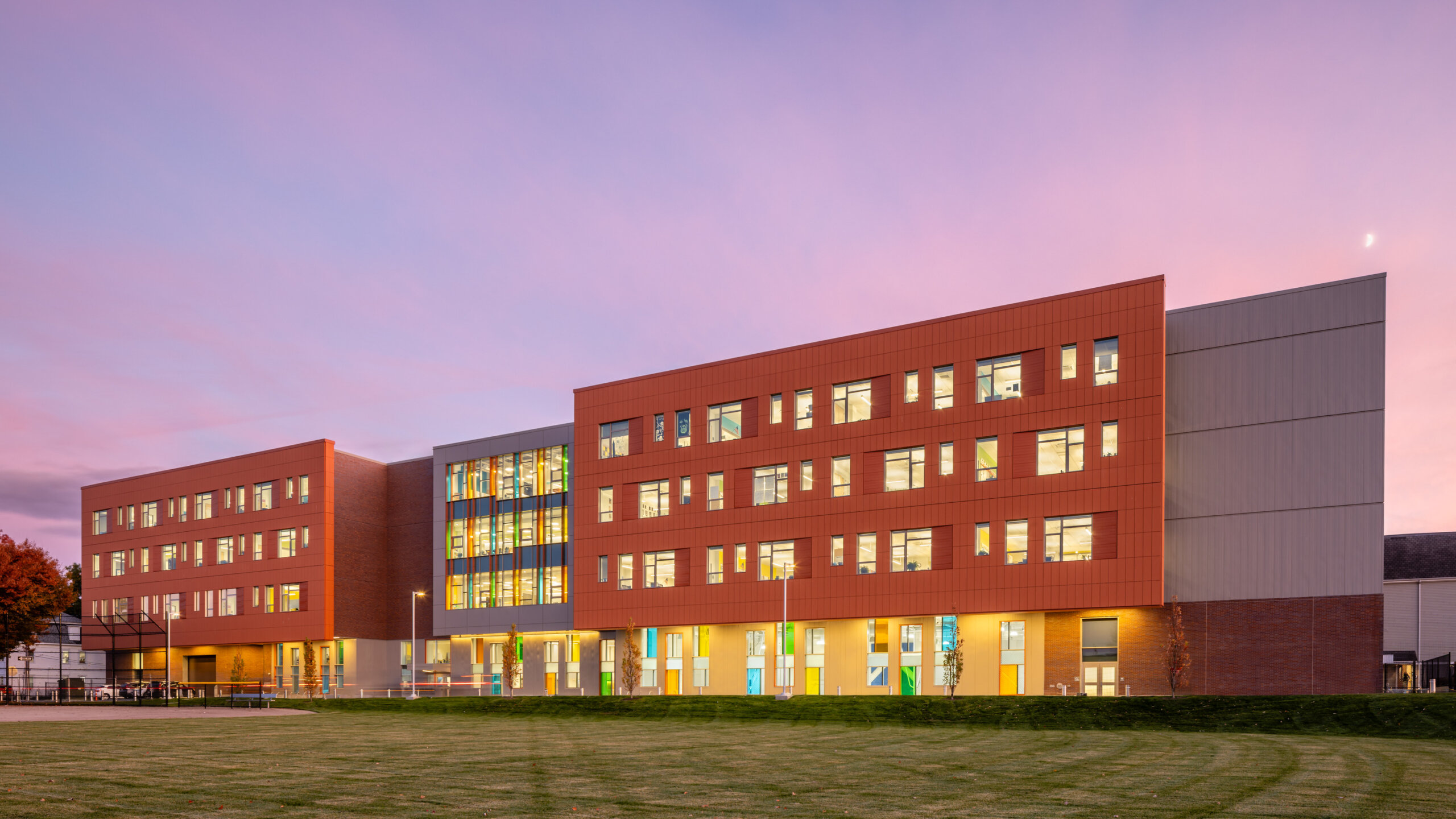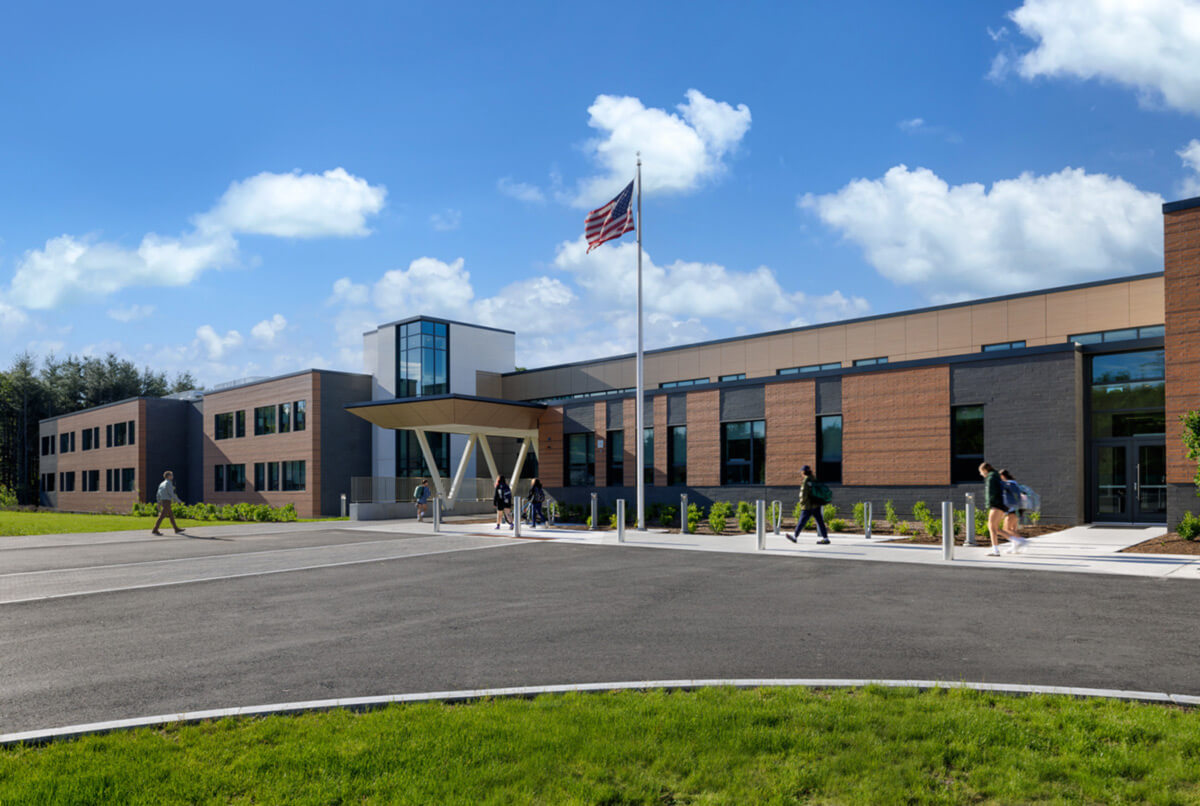
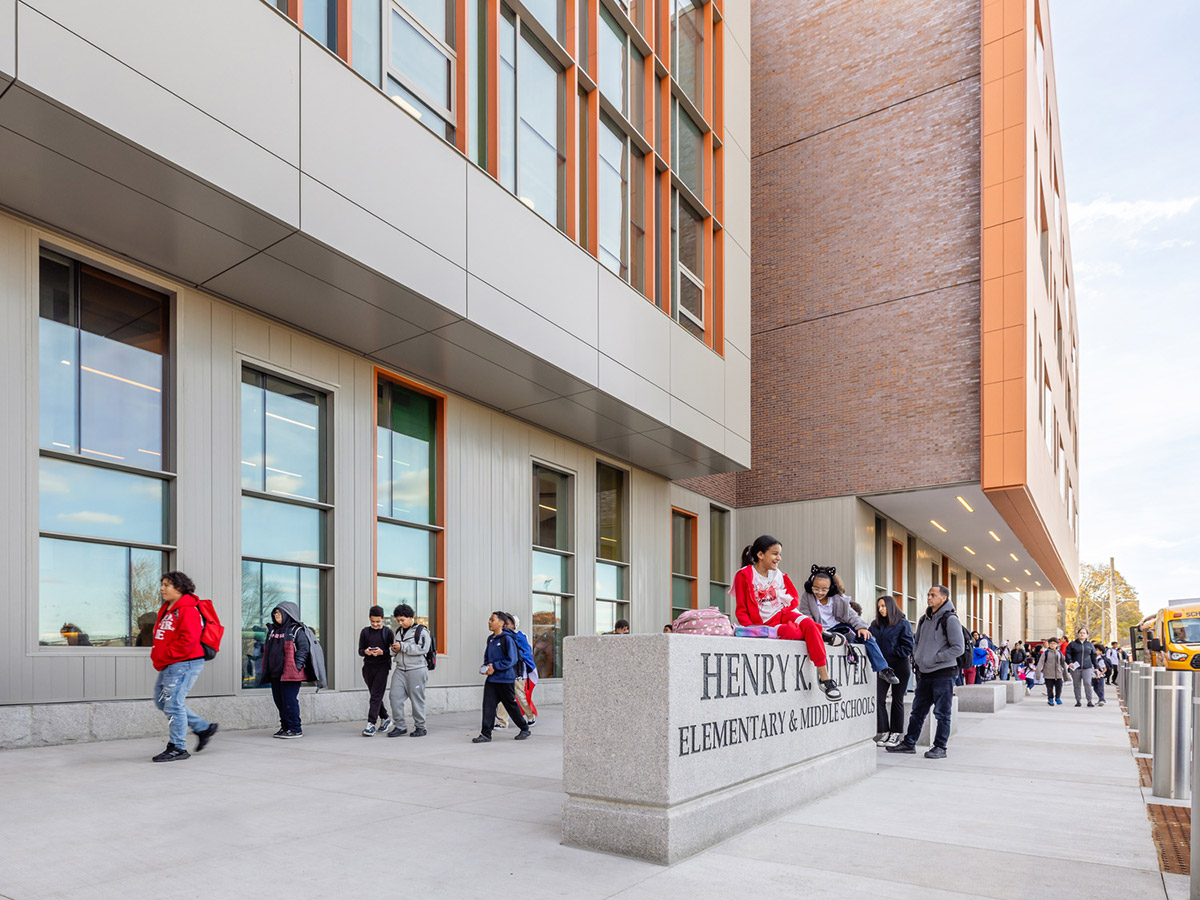
A “Gateway City”, Lawrence has long been a hub for immigration from Latin America.
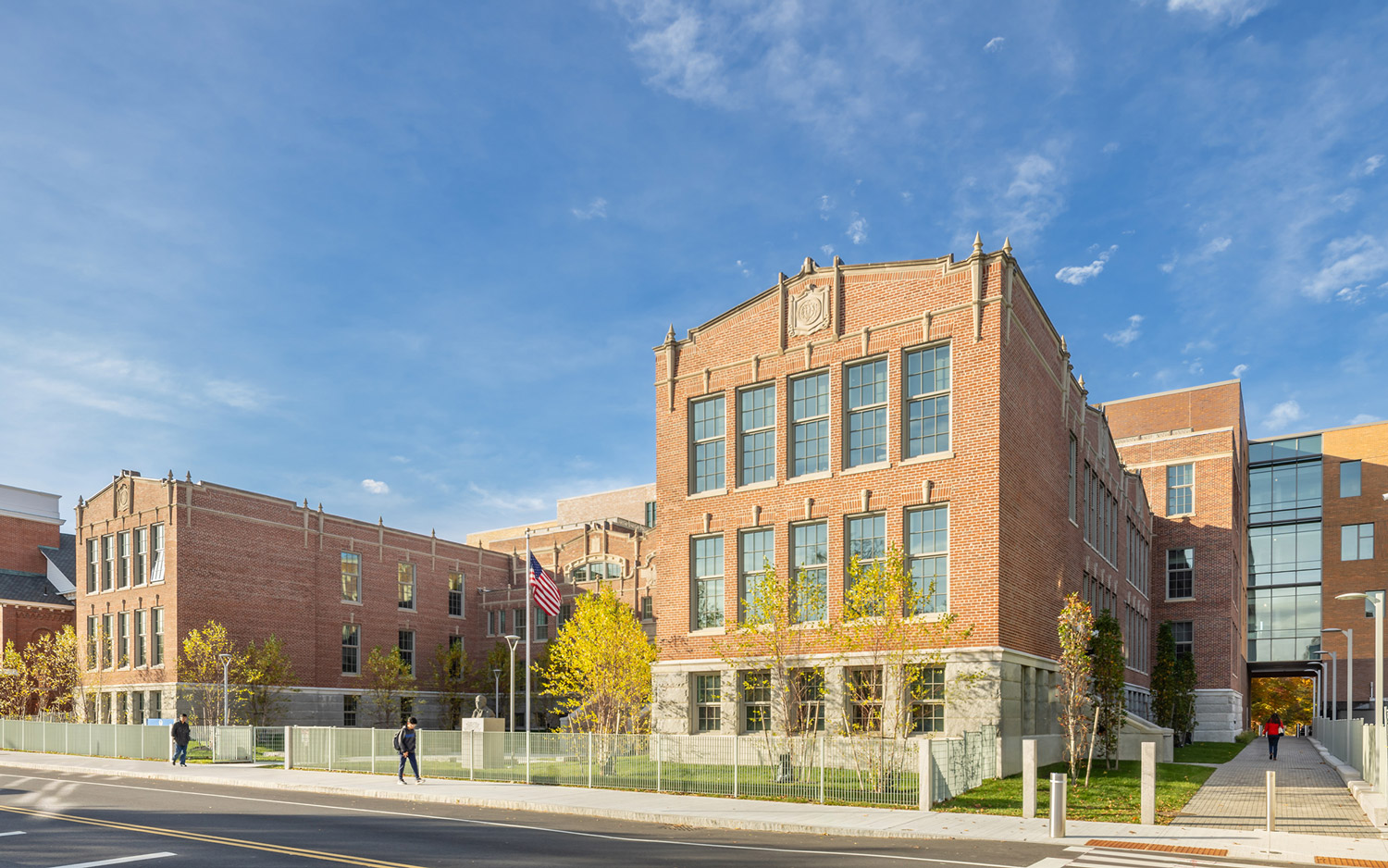
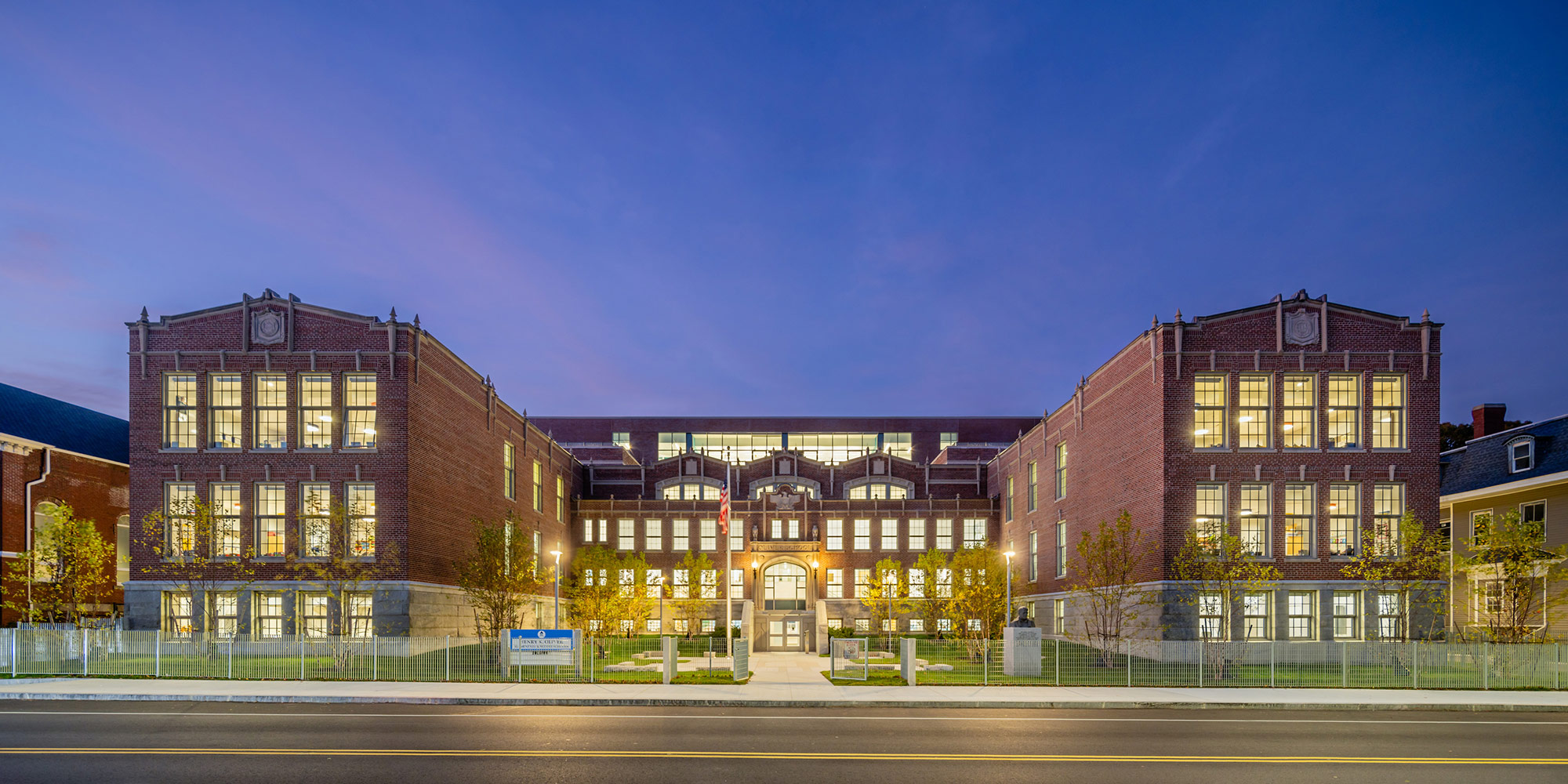
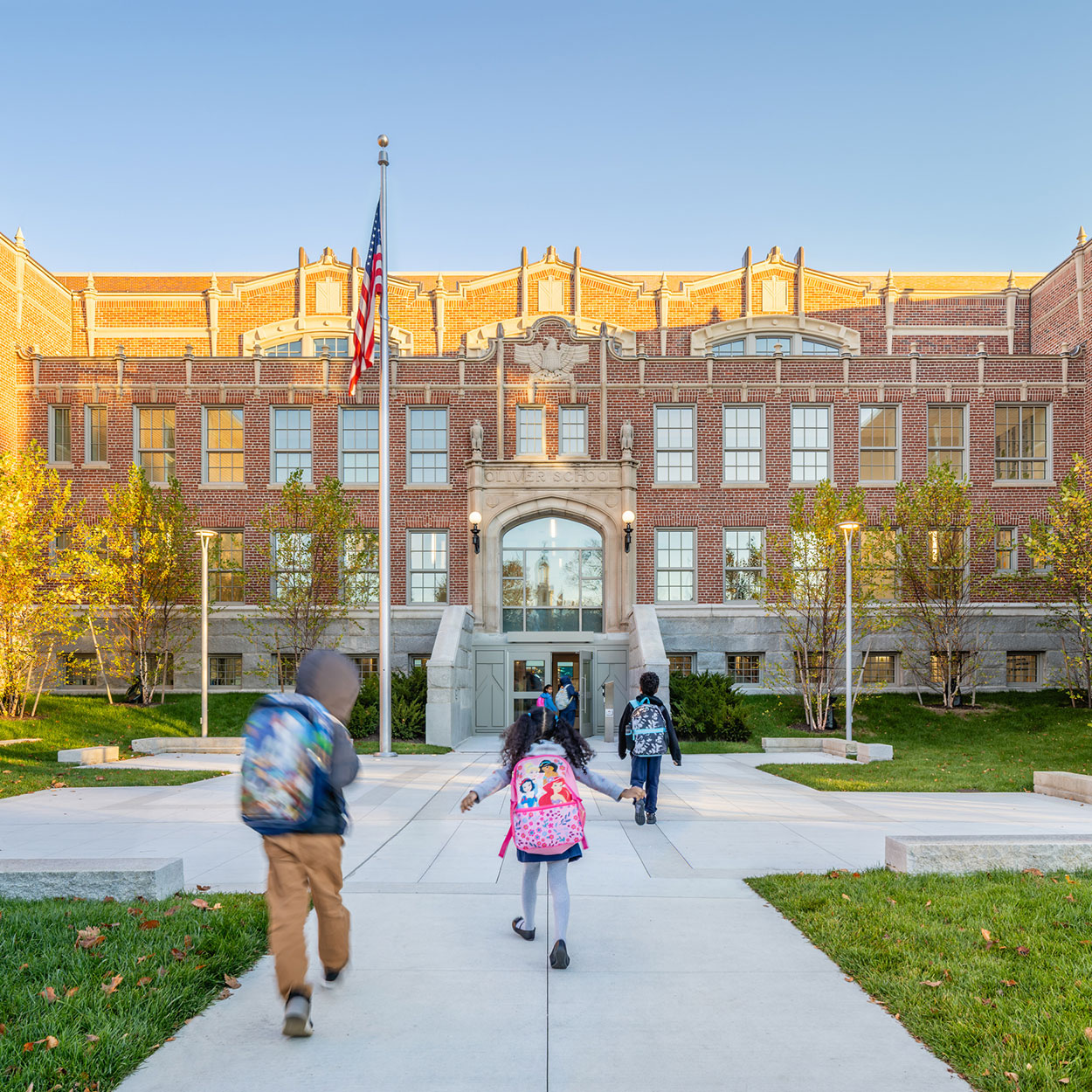
Built in 1917, the Oliver School is a symbolic city landmark.
SMMA worked with Lawrence Public Schools and state and local historic commissions to preserve and enhance the symbolic south-facing portion of the building. The design retains key historic façades and architectural details. This involved reinforcing existing masonry walls to blend seamlessly with new construction.
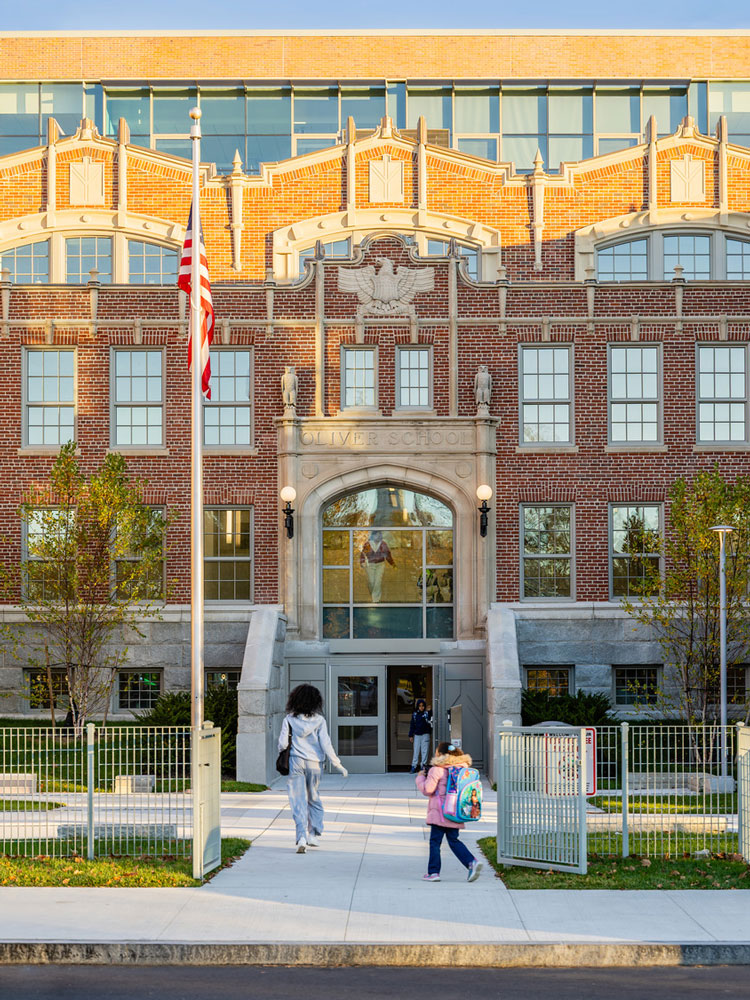
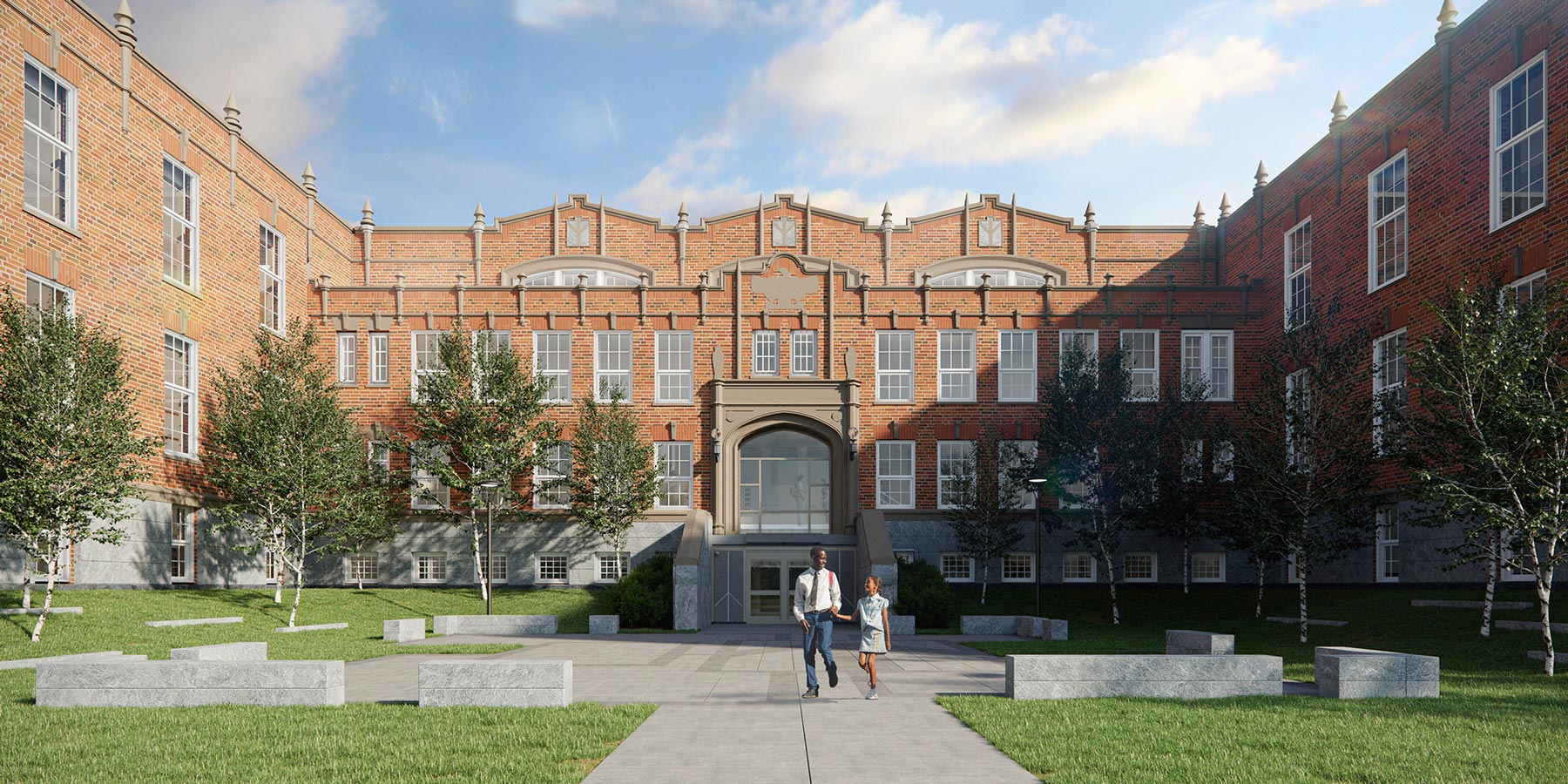
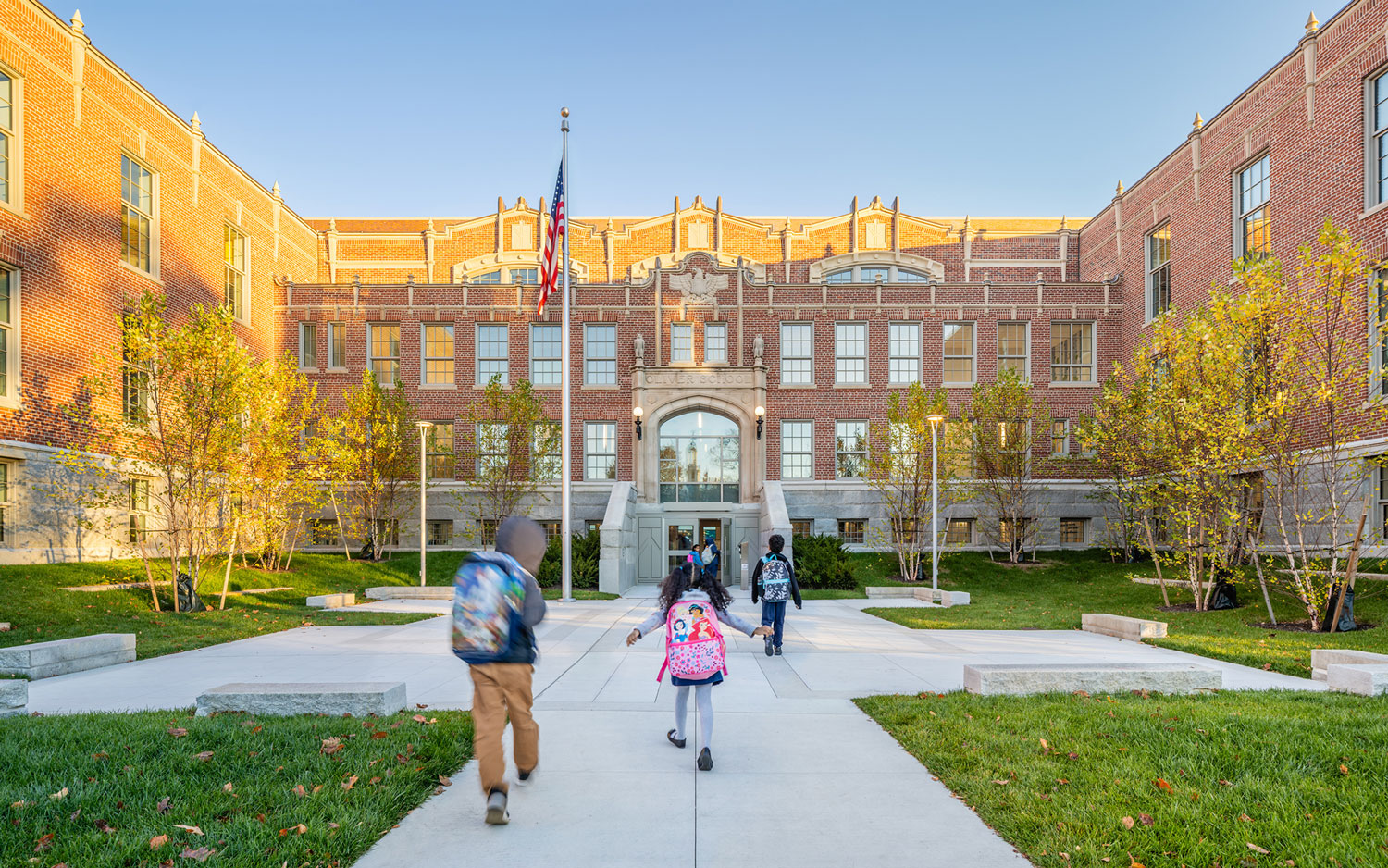
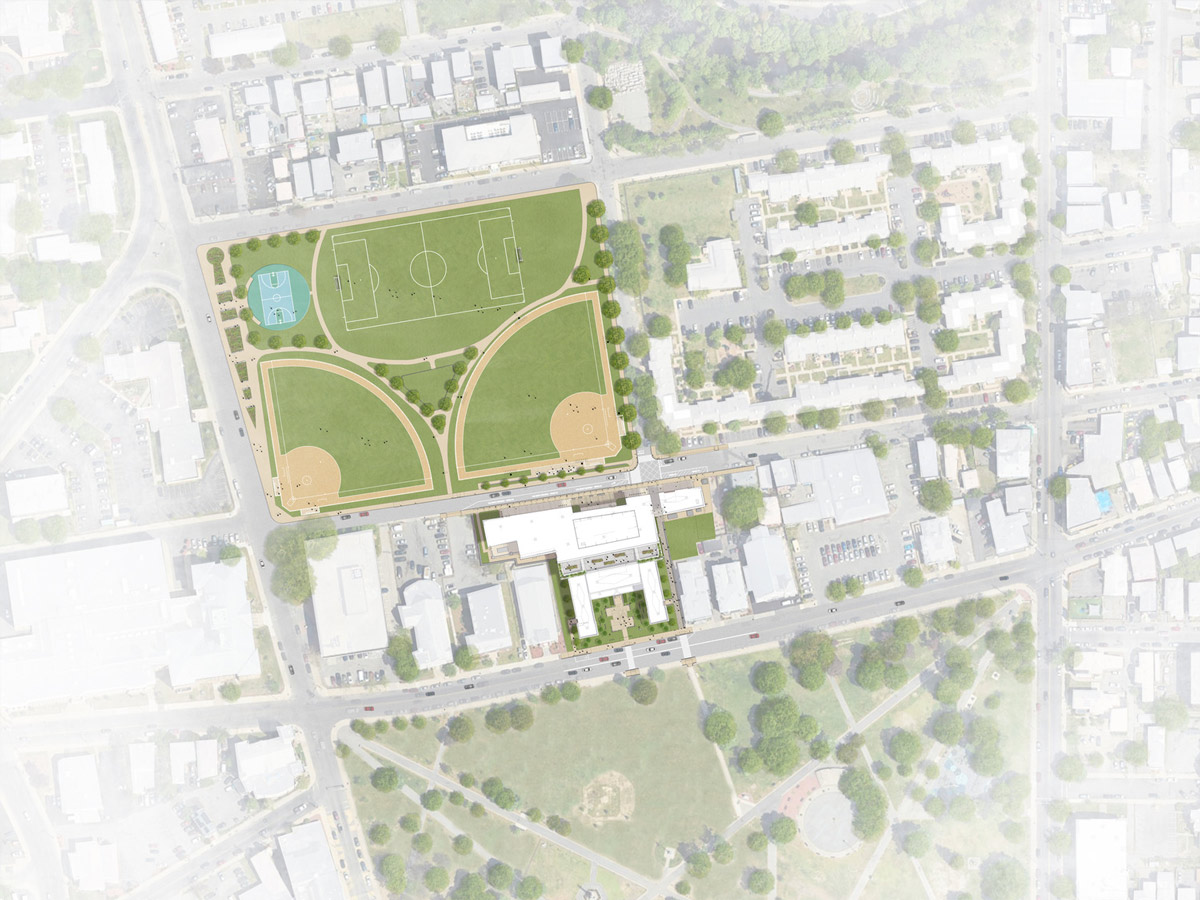
The building boasts a central location near City Hall and Campagnone Commons.
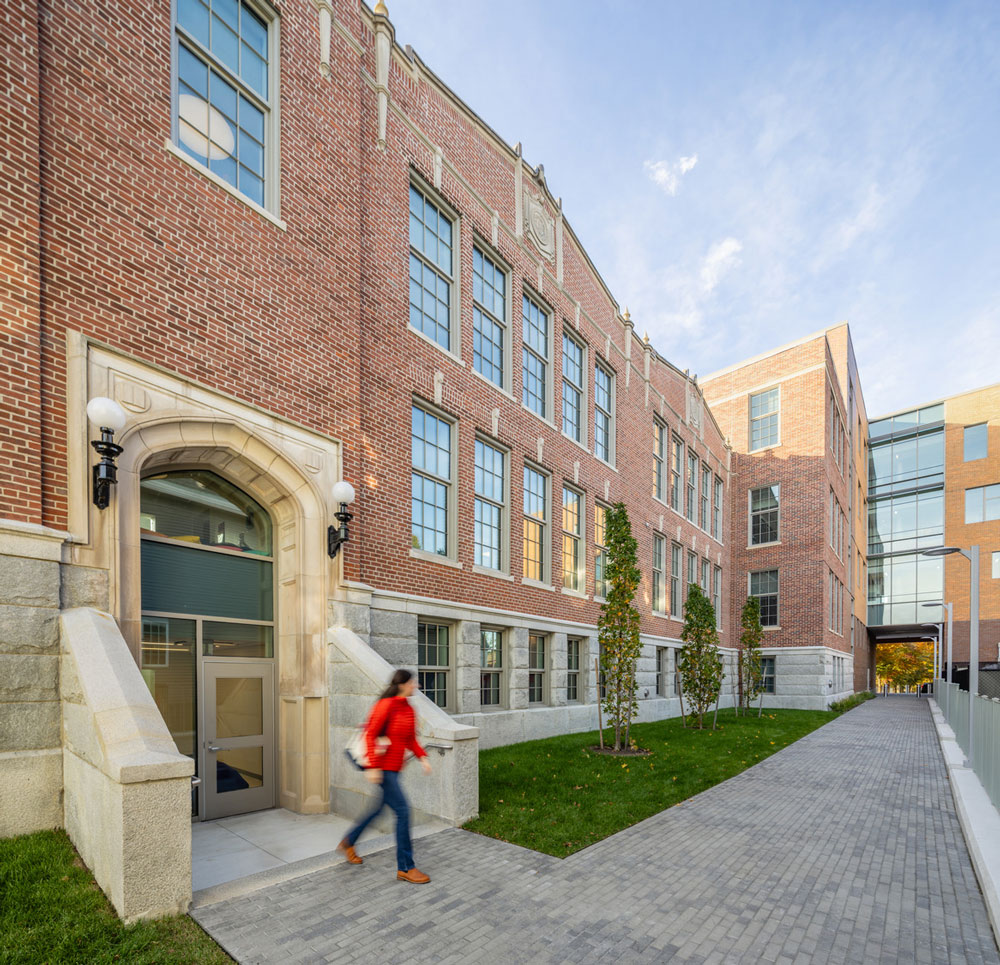
The new design reimagines Cardillo Way as a car-free, walkable portal connecting O’Neill Park with the north and the Commons to the south.
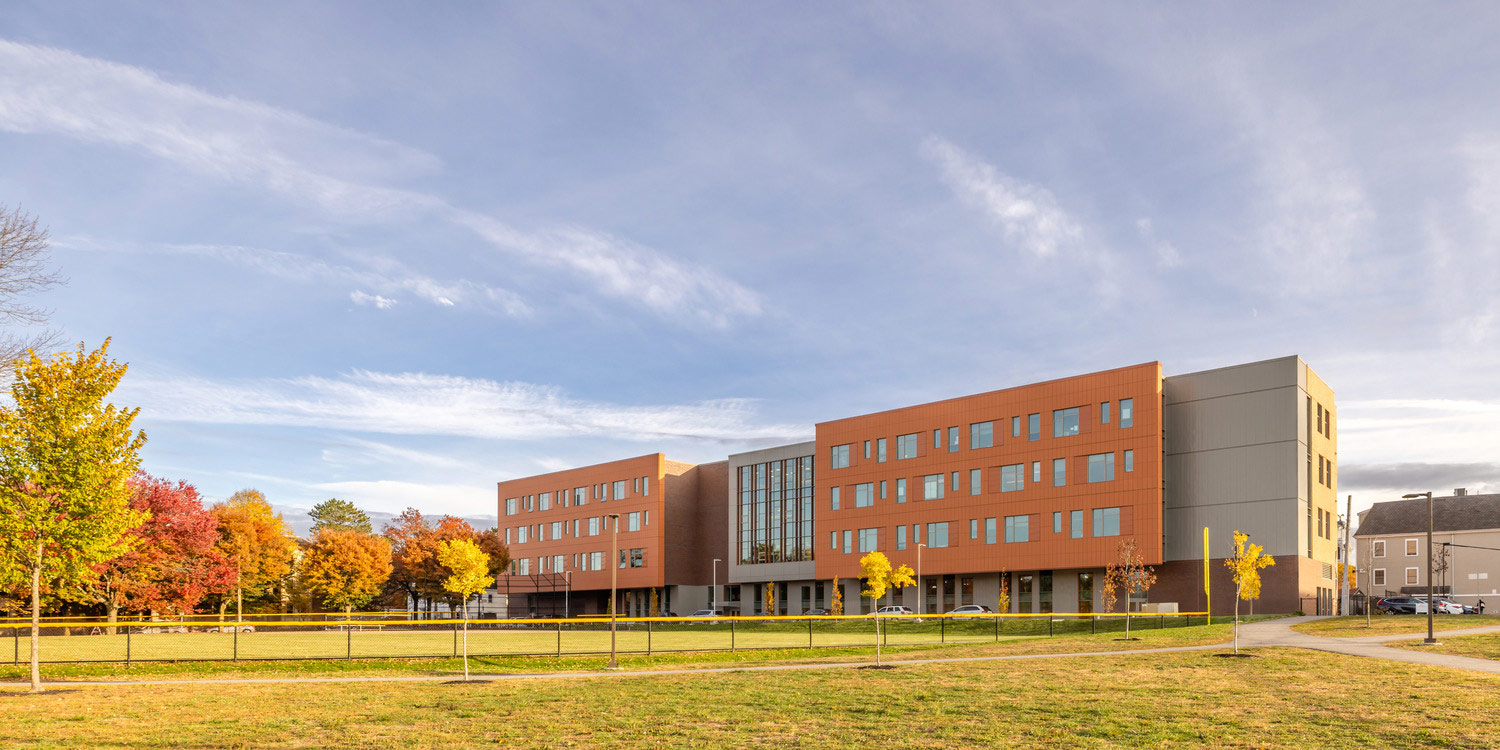
The City of Lawrence sought all-electric systems for its new school.
This goal was influenced in part by a backlash against natural gas systems after the 2018 Merrimack Valley gas explosions, which destroyed homes and businesses across Lawrence and nearby North Andover.
“It was really something that traumatized a lot of our community,” says Angely Alba Burgos, K-4 Principal. “So having a building that is all electric takes away some of those thoughts.”
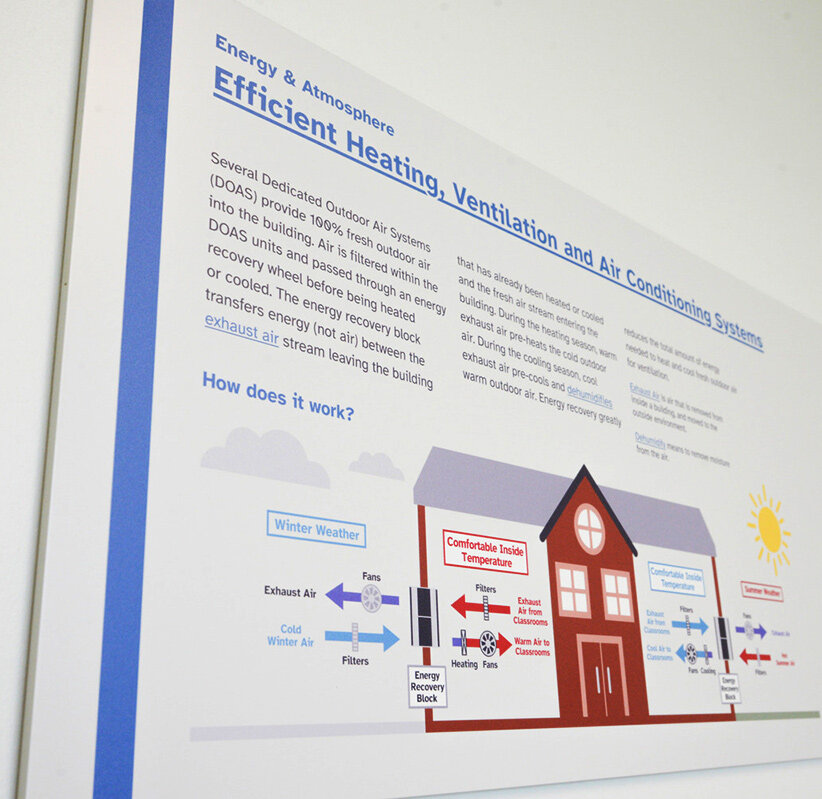
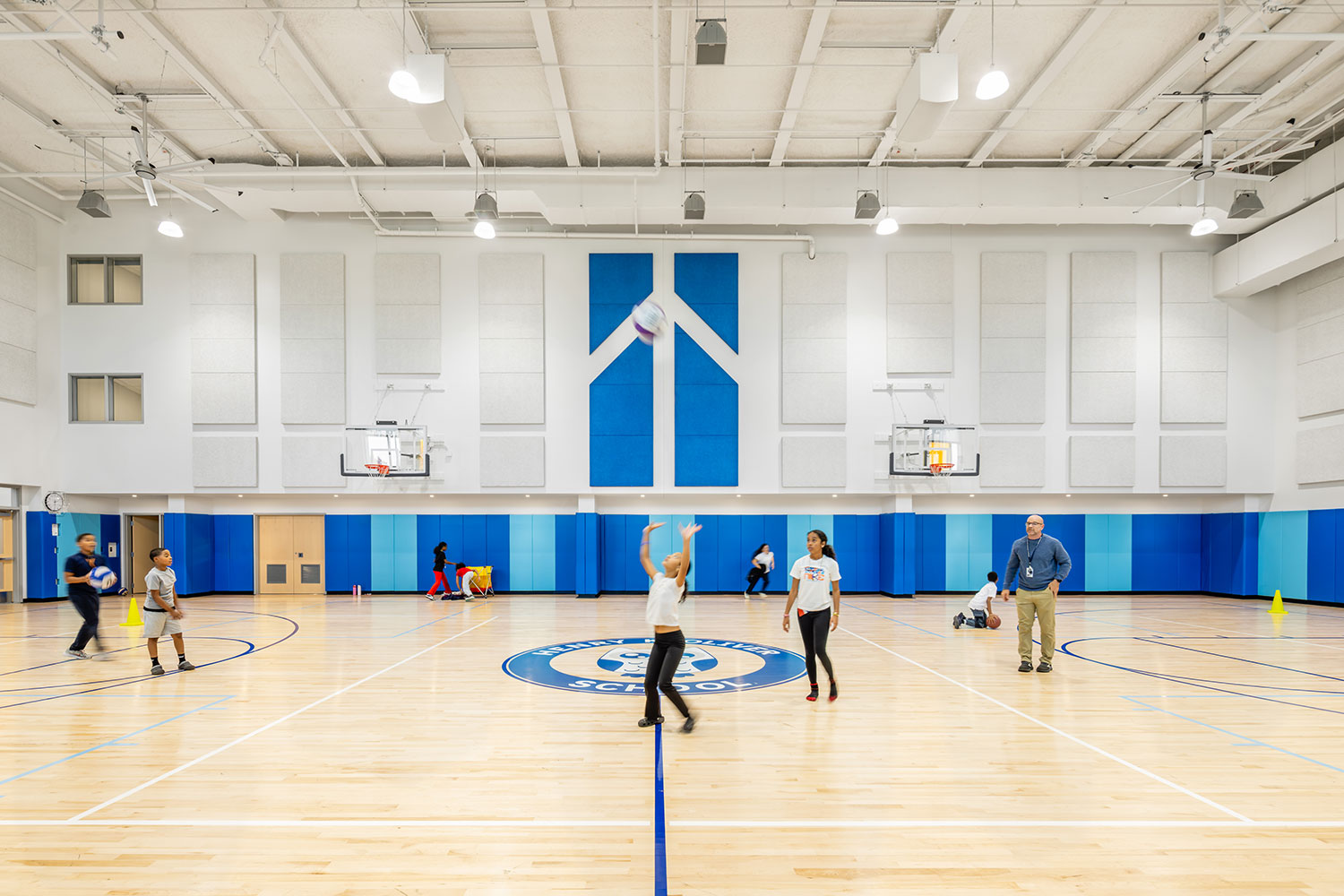
The new building is fully air-conditioned. Comfort and efficiency is ensured via a careful MEP design that deploys VRF heat-pump systems, Demand Control Ventilation, and Energy Recovery Units that reclaim up to 90% of exhaust energy.
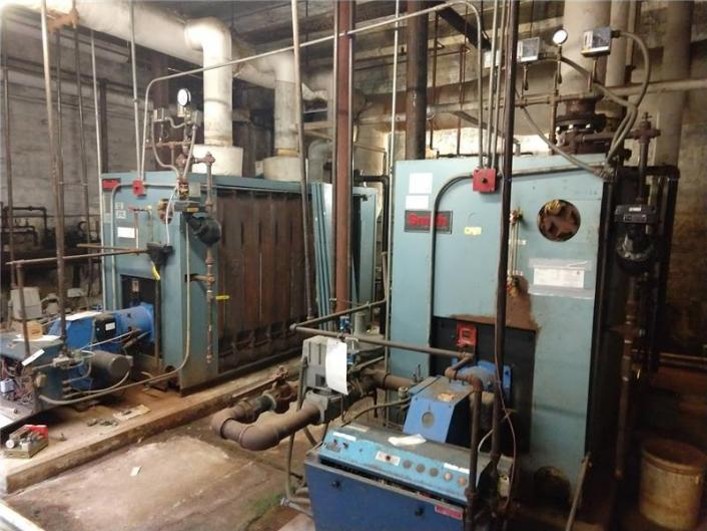
Redesigning 100-year old systems
|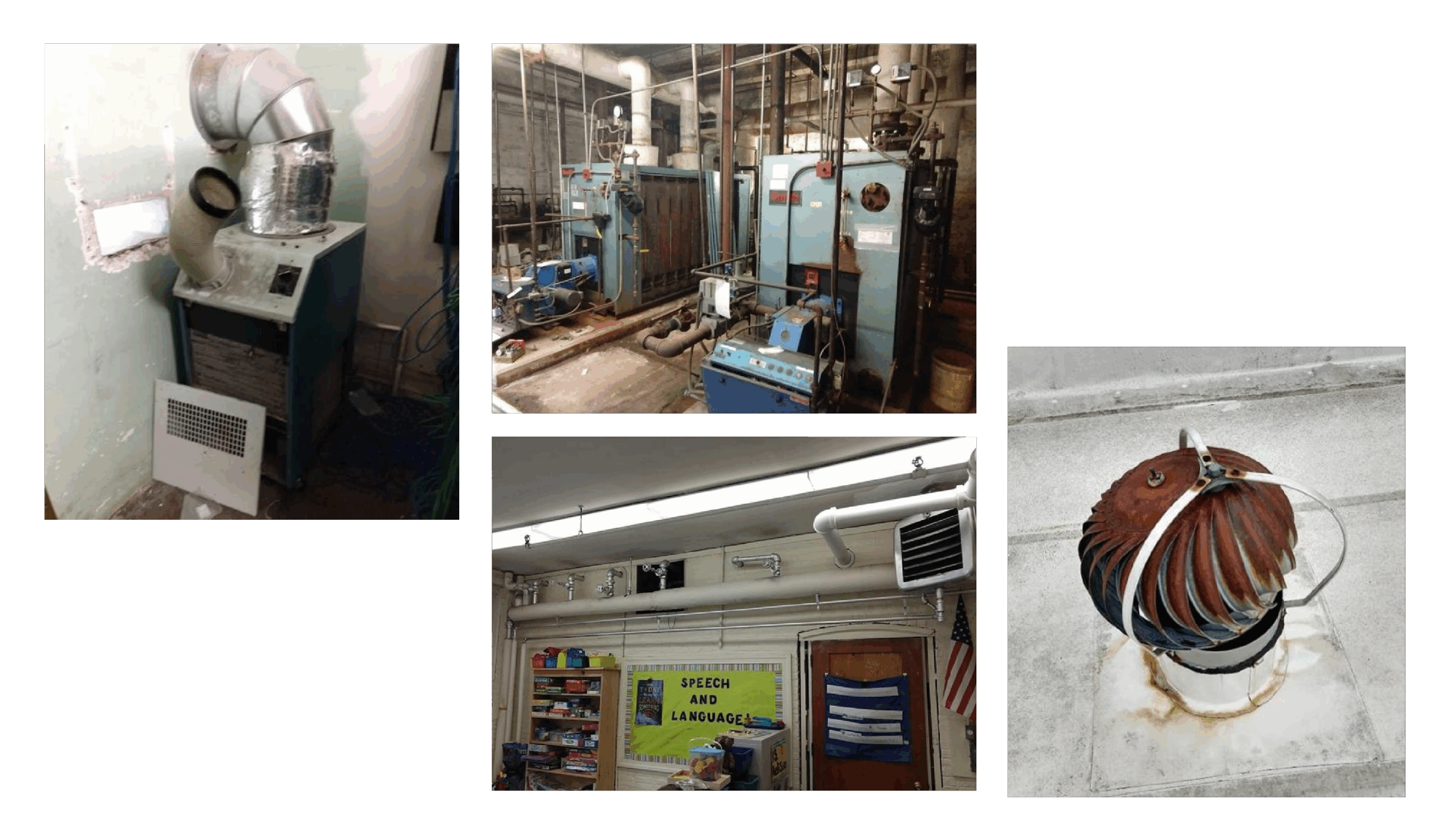
SMMA was tasked with transforming an aging facility with virtually no ventilation, dated systems, and oppressive temperatures into a fully air-conditioned building. The old school’s MEP systems were not much different to when the first class of students arrived in 1917. The building lacked full air-conditioning, while its gravity vents, ventilation shafts, and radiators were similar to the original design. Many spaces relied on window units for cooling. Chronic issues included temperature control, cooling, ventilation, and thermal efficiency.
Despite the building’s physical constraints, the team was able to develop a host of solutions to deliver efficient heating and cooling, excellent air quality, and long-term cost savings.
To heat and cool the classrooms, the team used Variable Refrigerant Flow (VRF) cassette units decoupled from the ventilation system. This saved significant ceiling space, reduced the need for extensive ductwork, and minimized coordination complexity. Classrooms benefit from sensor-based Demand Control Ventilation (DCV) technology combined with Variable Air Volume (VAV) boxes.
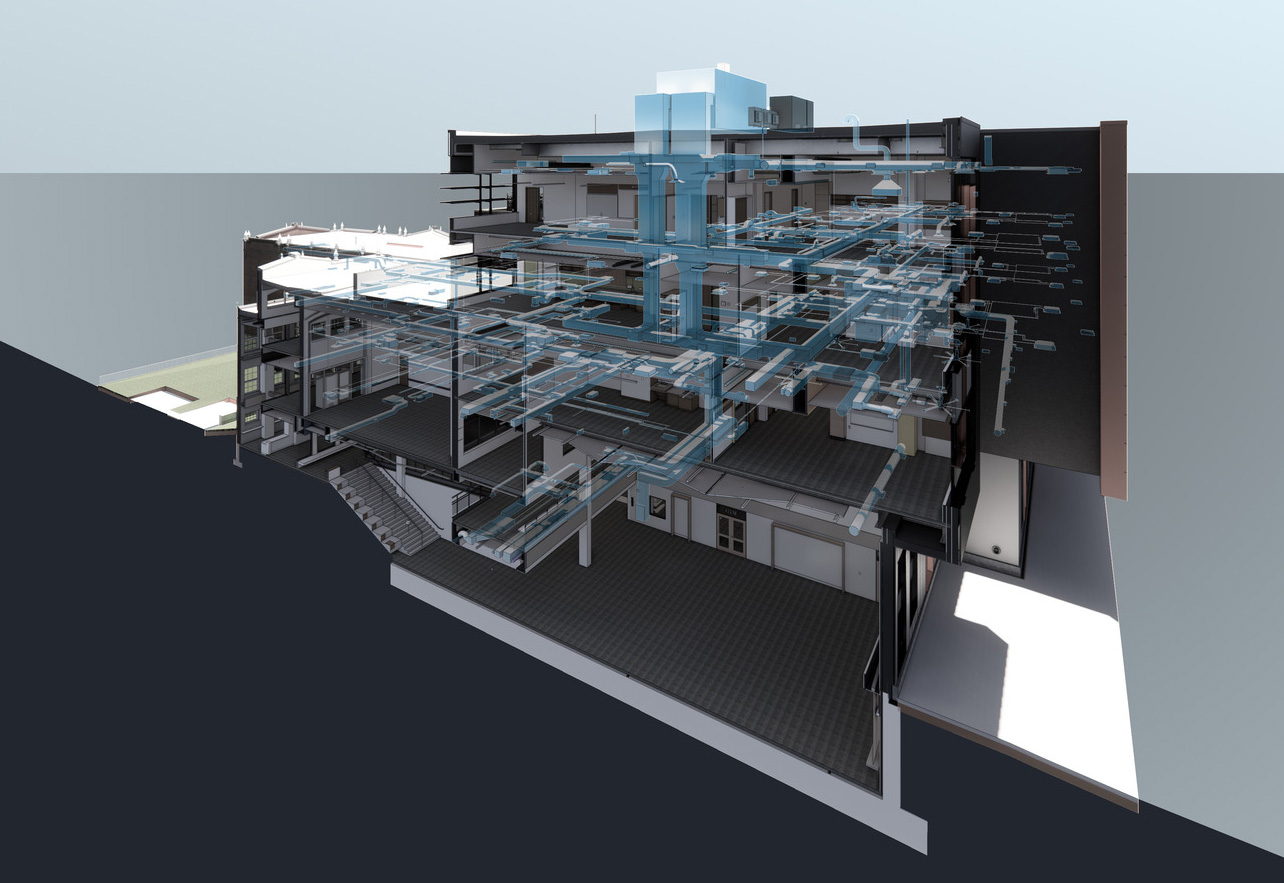
In another example of balancing wellness with efficiency, the team equipped DOAS units supplying ventilation to the entire building (above) with bipolar ionization units. This approach saves energy by preventing “pressure drop”. It also cleans the cooling coils, preventing buildup of potentially harmful pathogens.
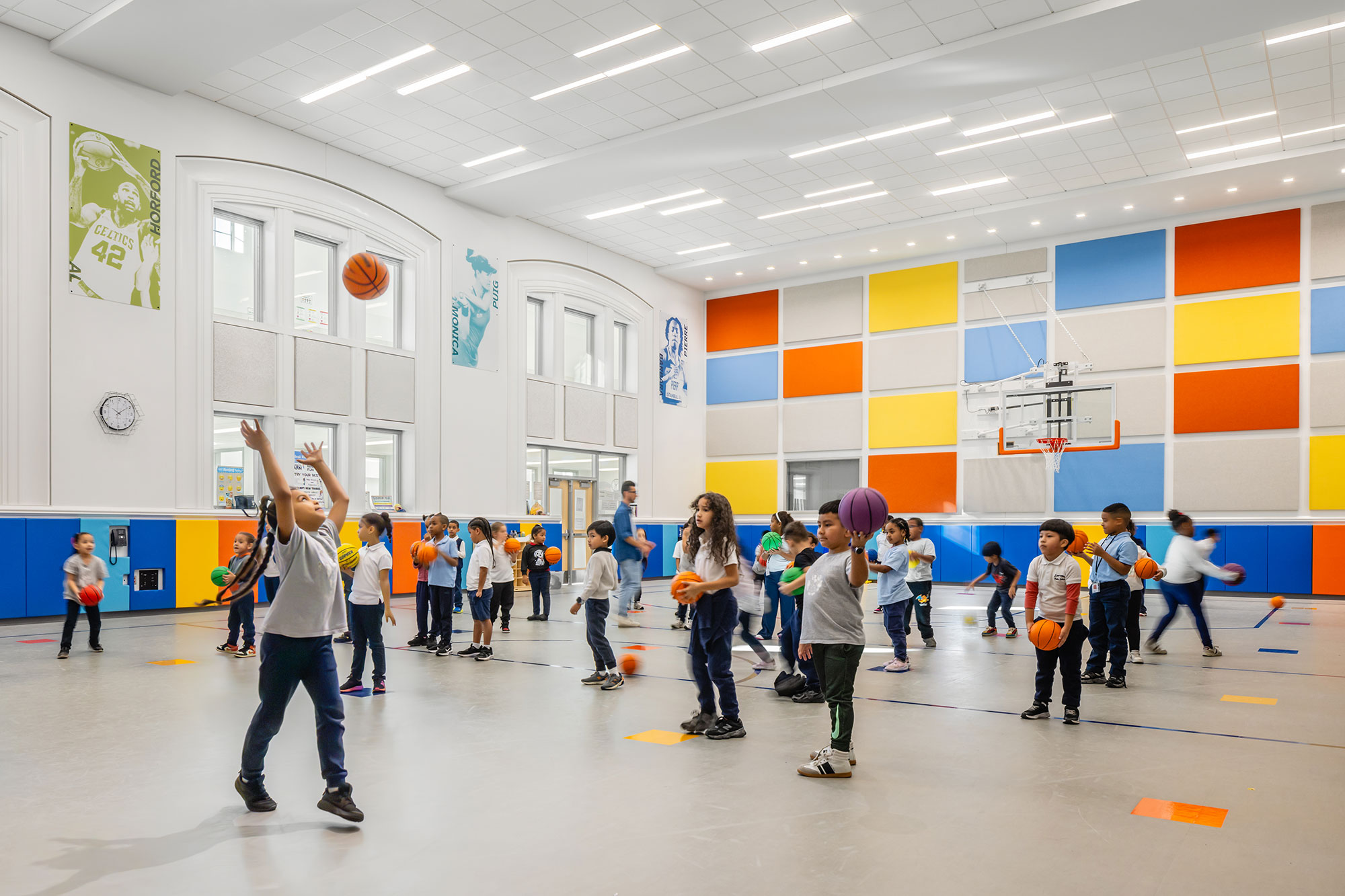
For larger spaces such as the gym, the team used an Energy Recovery Units (ERU) system rated up to 10,000 CFM (cubic feet per minute). This system recovers about 90% of the energy from the exhaust air. In the gym, the team also installed four ceiling fans to prevent stratification (hot air rising to the ceiling) and help maintain a uniform temperature.
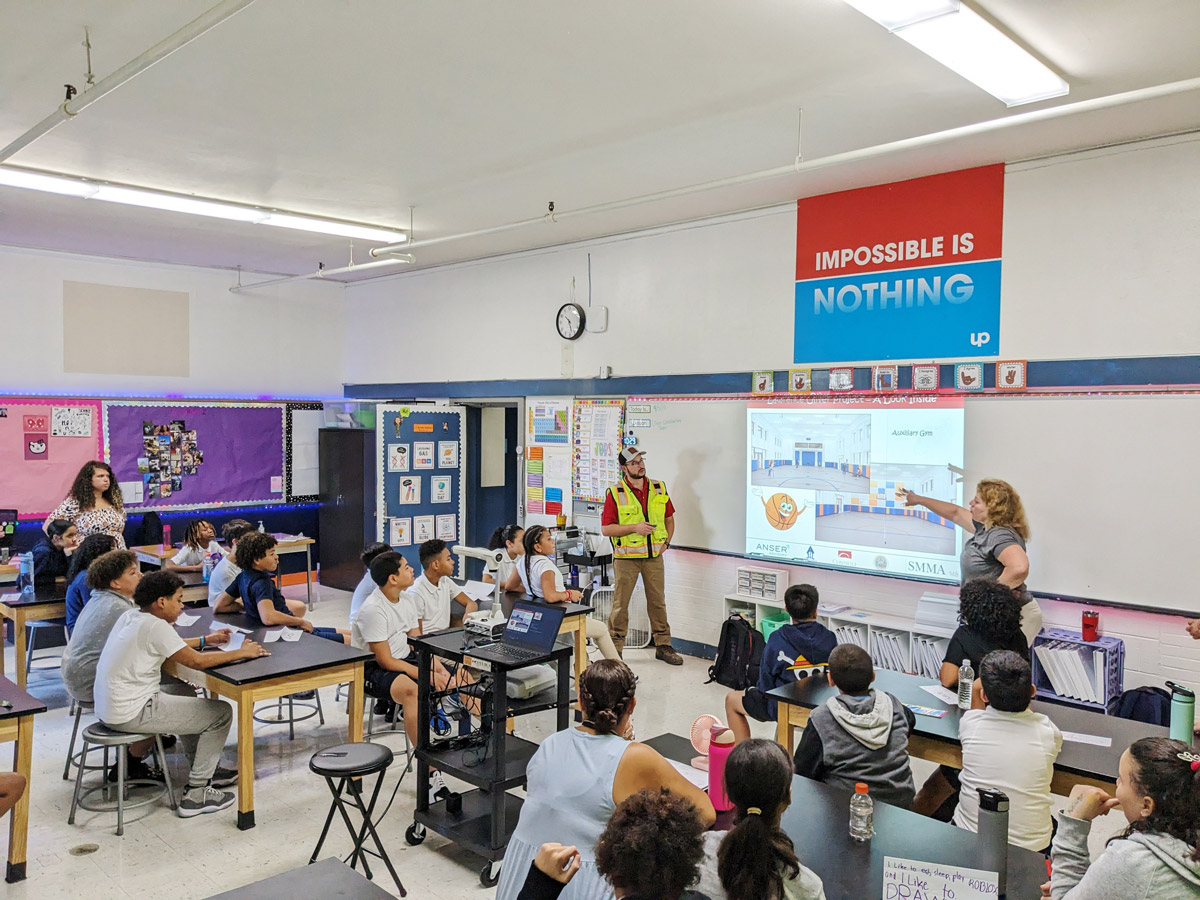
In September 2023, as demolition and construction was in full swing, SMMA’s team gave a bi-lingual Q&A with four classes of 6th graders about their new school. These students are set to be the first graduating 8th grade class of the new Henry K. Oliver. The team discussed everything from the building systems to the 4' thick slab – but what drew the loudest cheers on this 86'F day was the news that their new school will be fully air-conditioned.
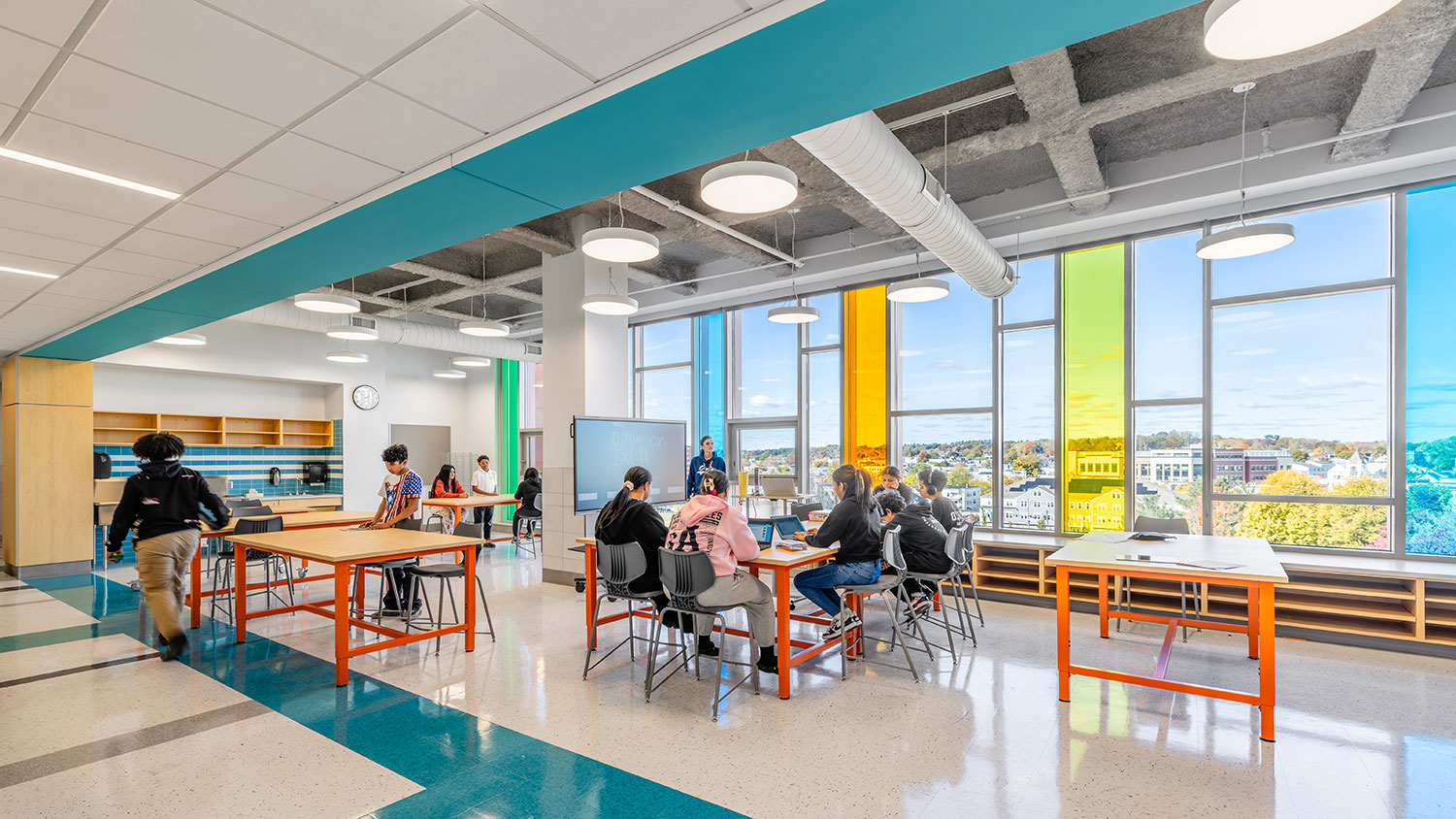
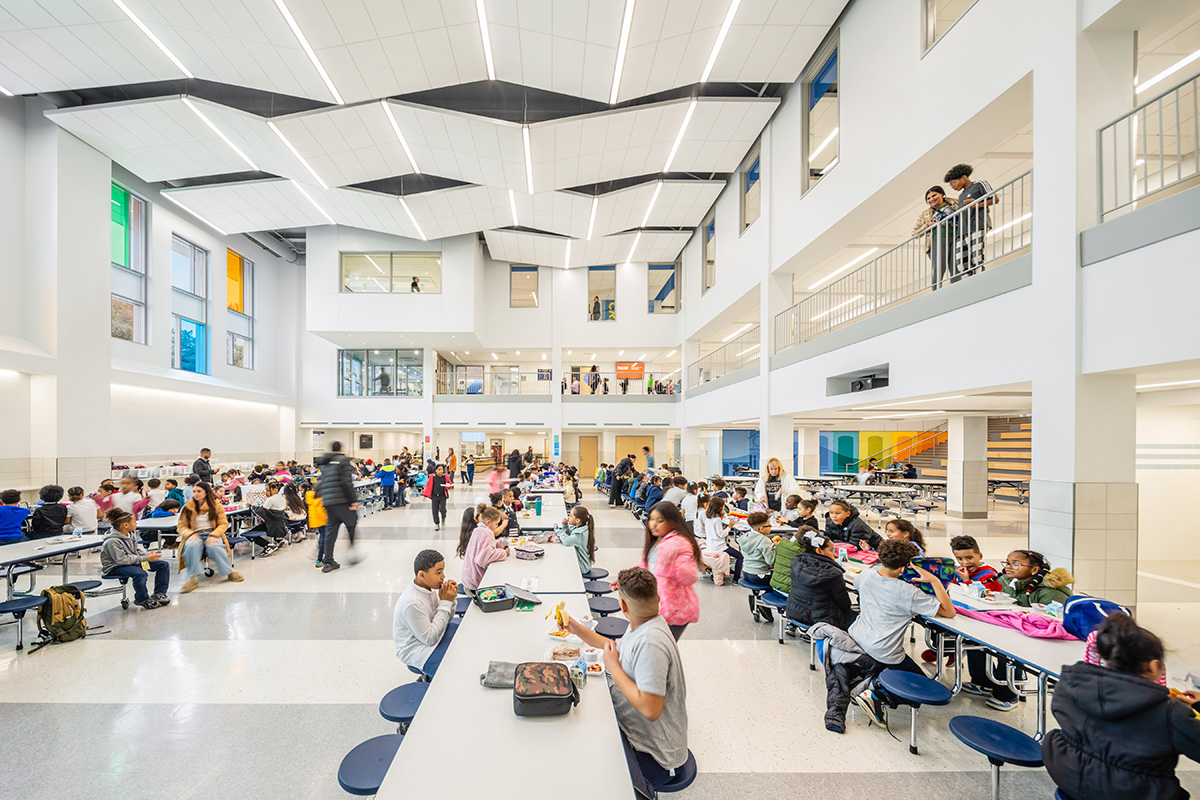
Students and teachers enjoy access to flexible, modern learning environments.
The design for the new Oliver school introduces learning stairs, distributed media centers, outdoor learning spaces, and collaborative “breakout areas” that support small-group work and diverse learning styles. These spaces allow teachers to move beyond traditional classroom setups, encouraging project-based and team-oriented learning.
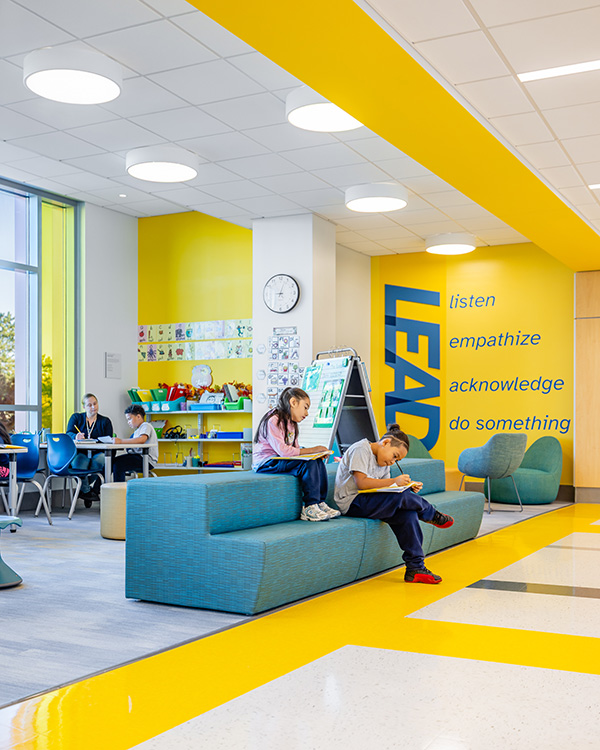
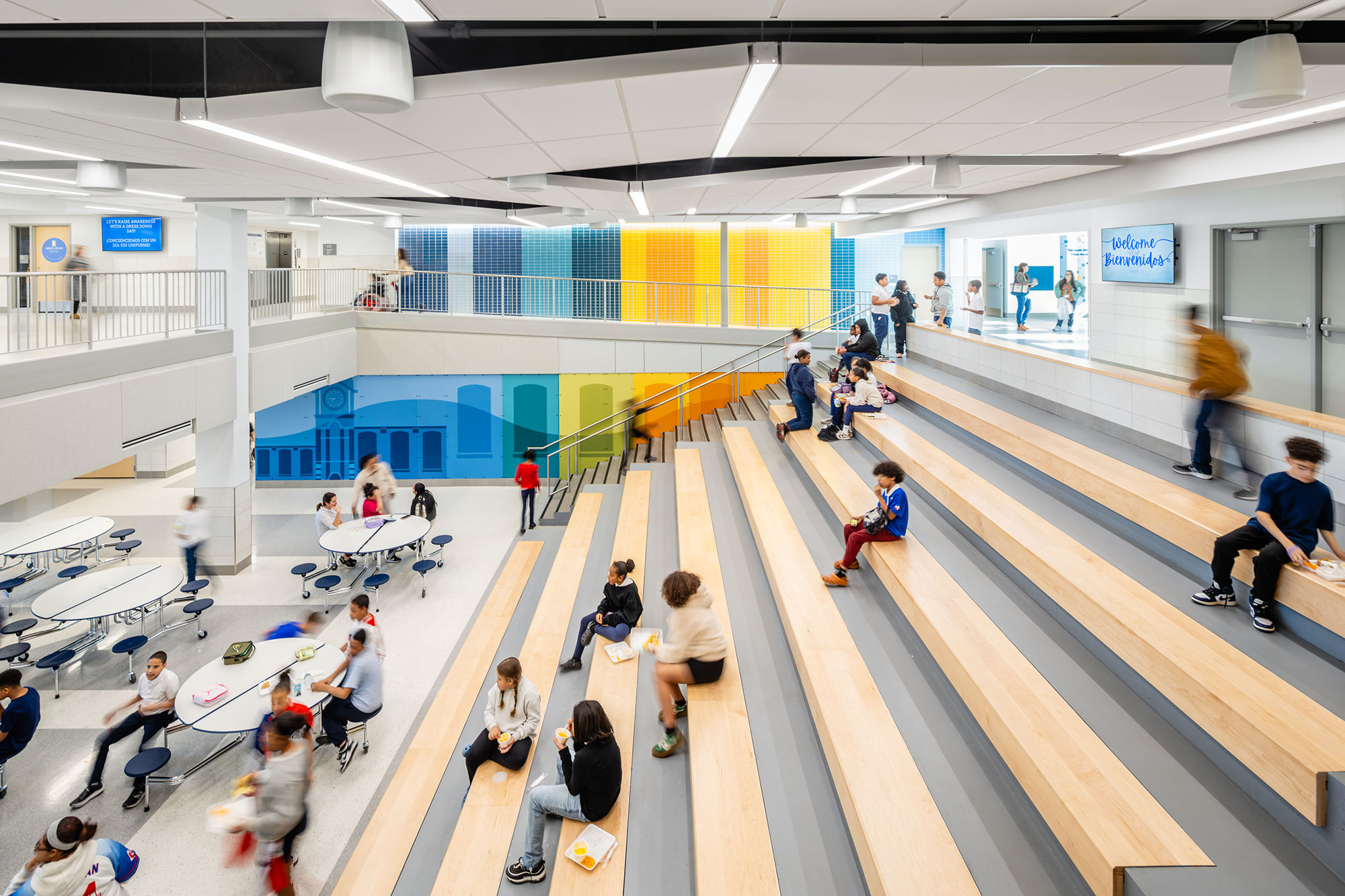
Experiential graphics celebrate the rich history and culture of Lawrence.
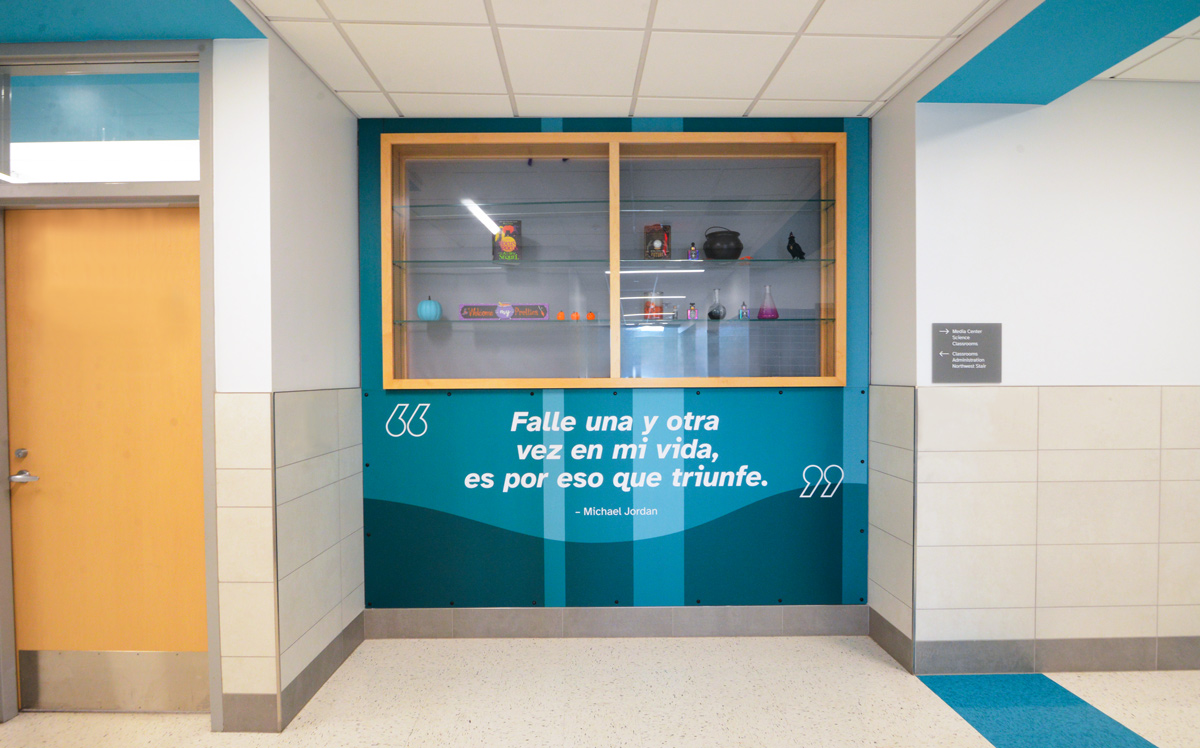
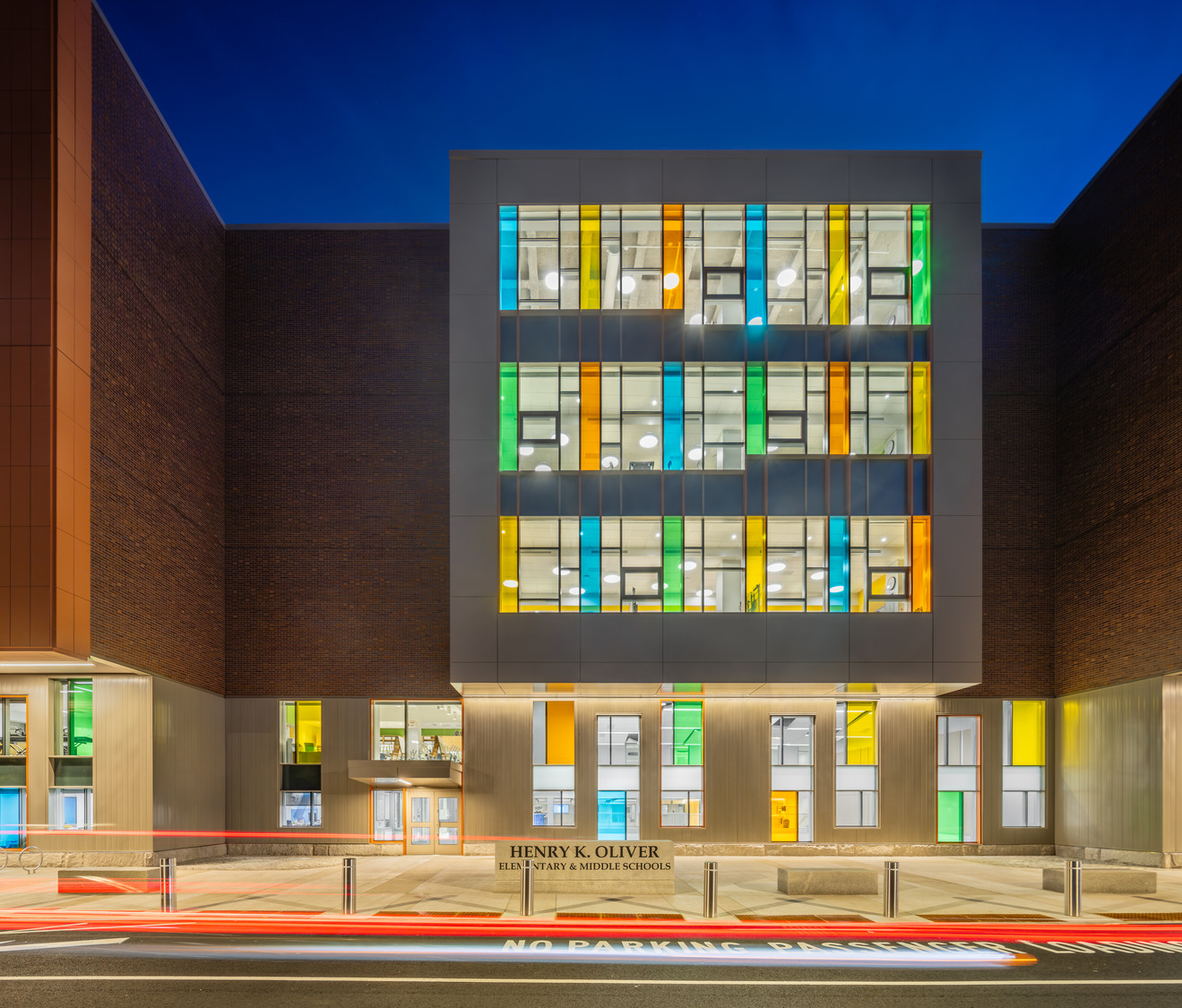
New graphics, colors, and wayfinding celebrate the city’s diversity and multilingualism, fostering a sense of belonging and pride.
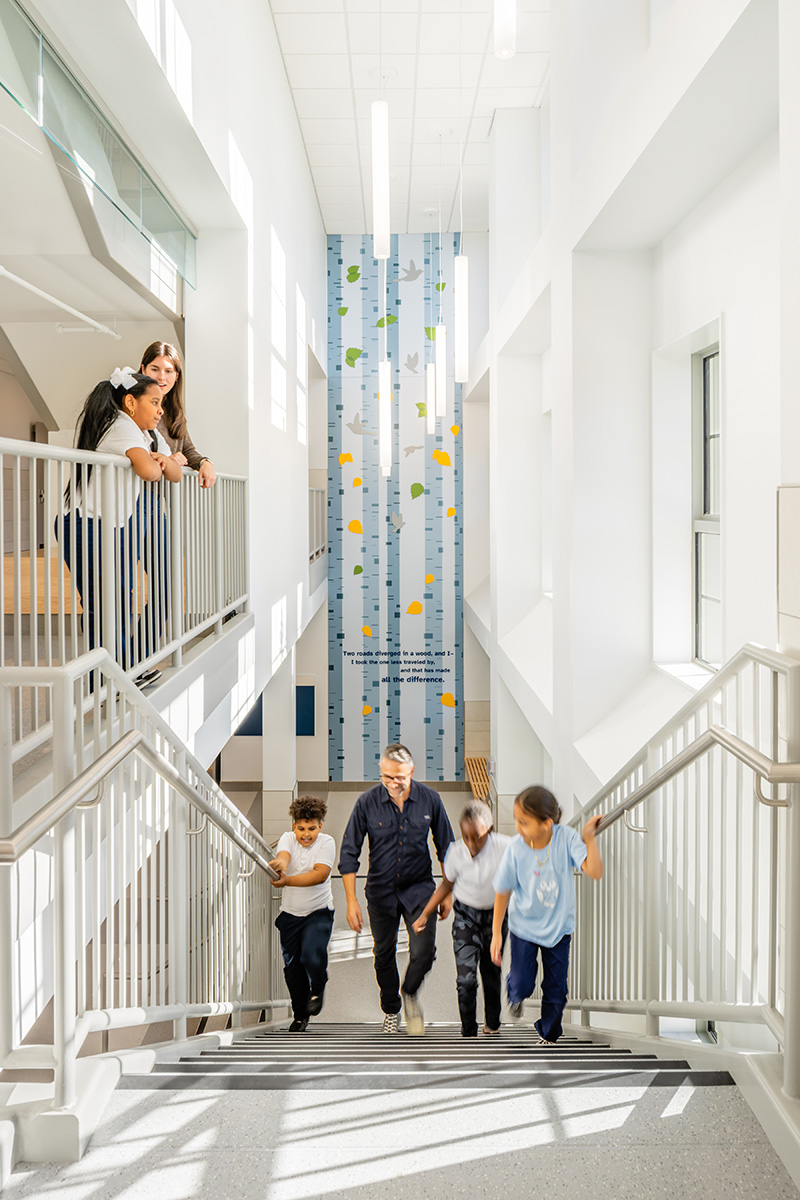
The double-height “Birch Wall” honors Robert Frost, poet and alumnus of the original Oliver School. Frost’s former home, a registered historical landmark, neighbors the school.