The Center City neighborhood is a five minute drive from downtown.
A working-class district, Center City boasts strong community bonds and a thriving immigrant population. “Community and family is huge here,” says Jason Bonilla, Ward 5 Alderman. “It was long past time to build a better school that people who live here can be proud of.”
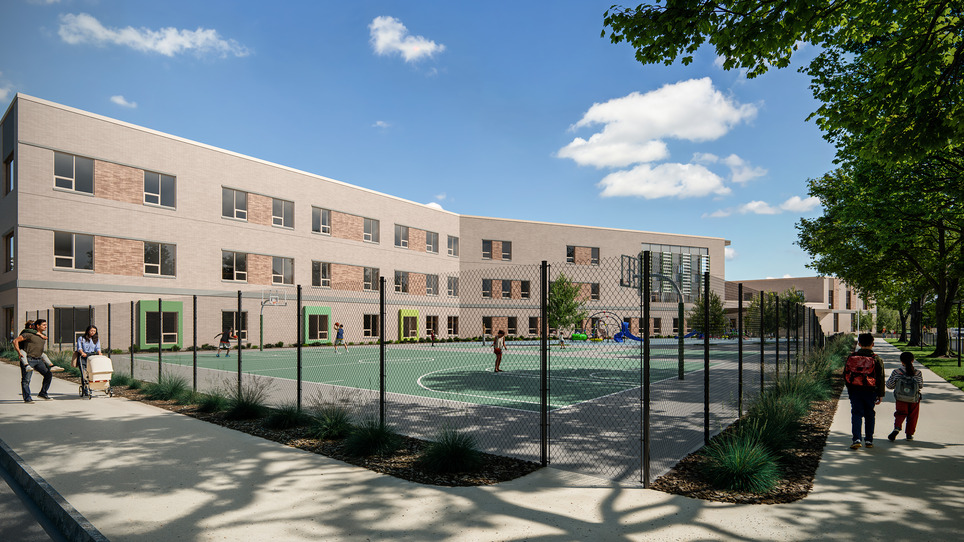
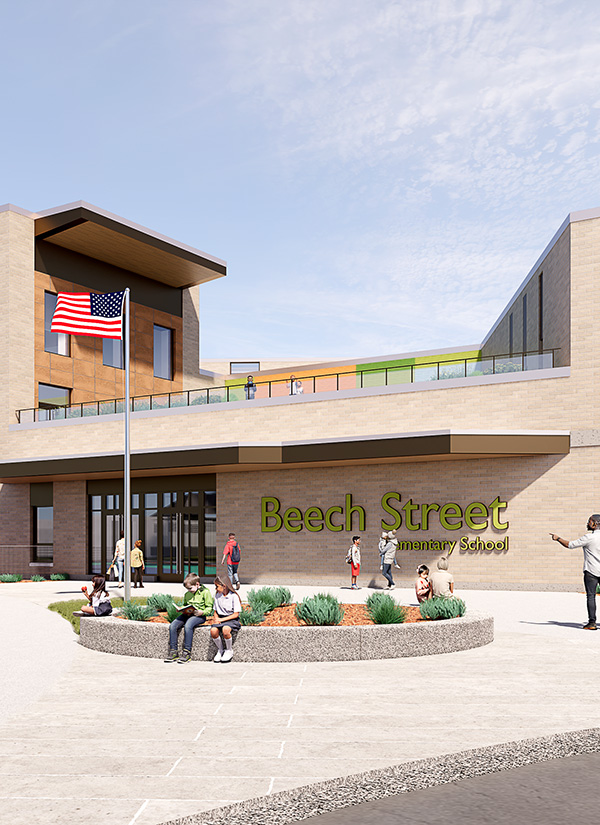
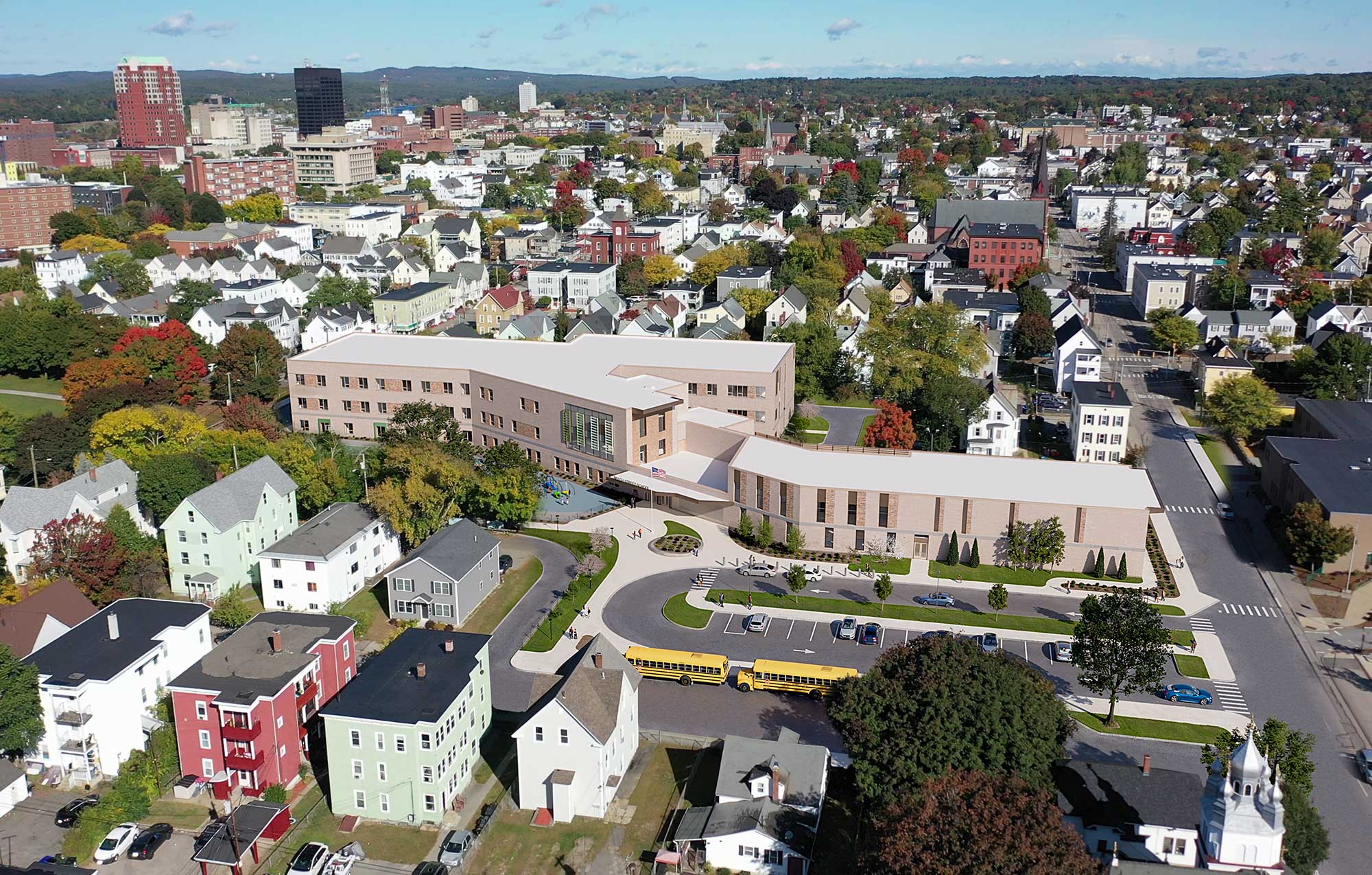
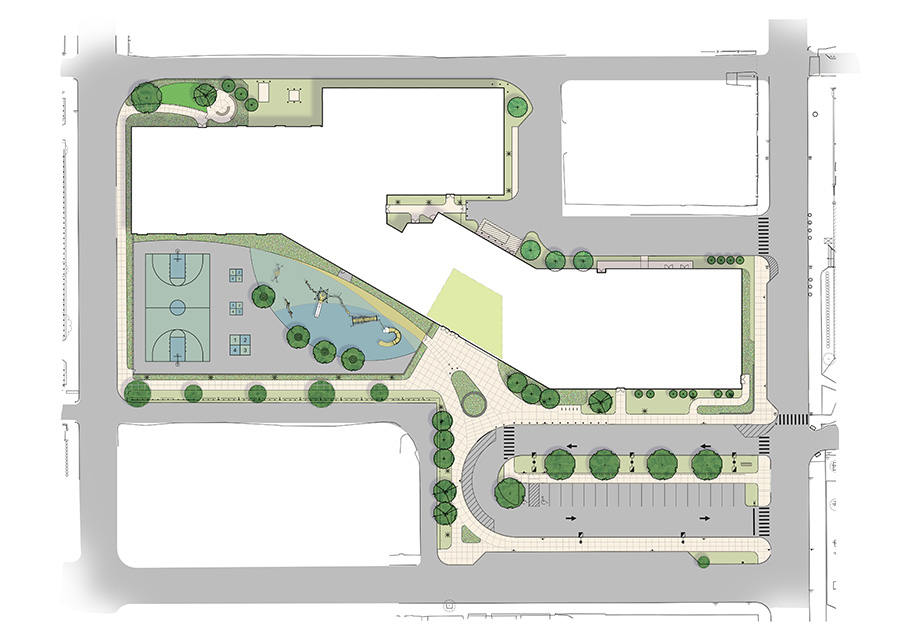
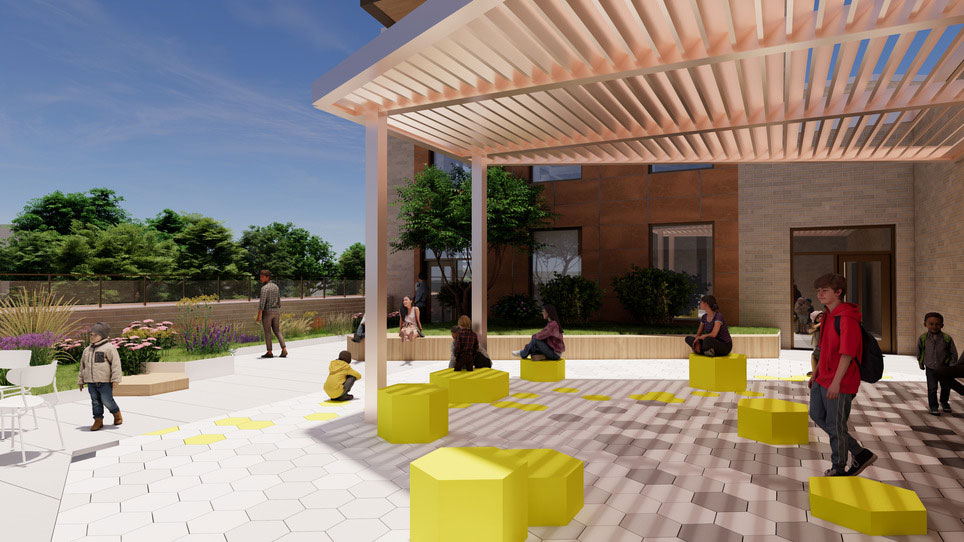
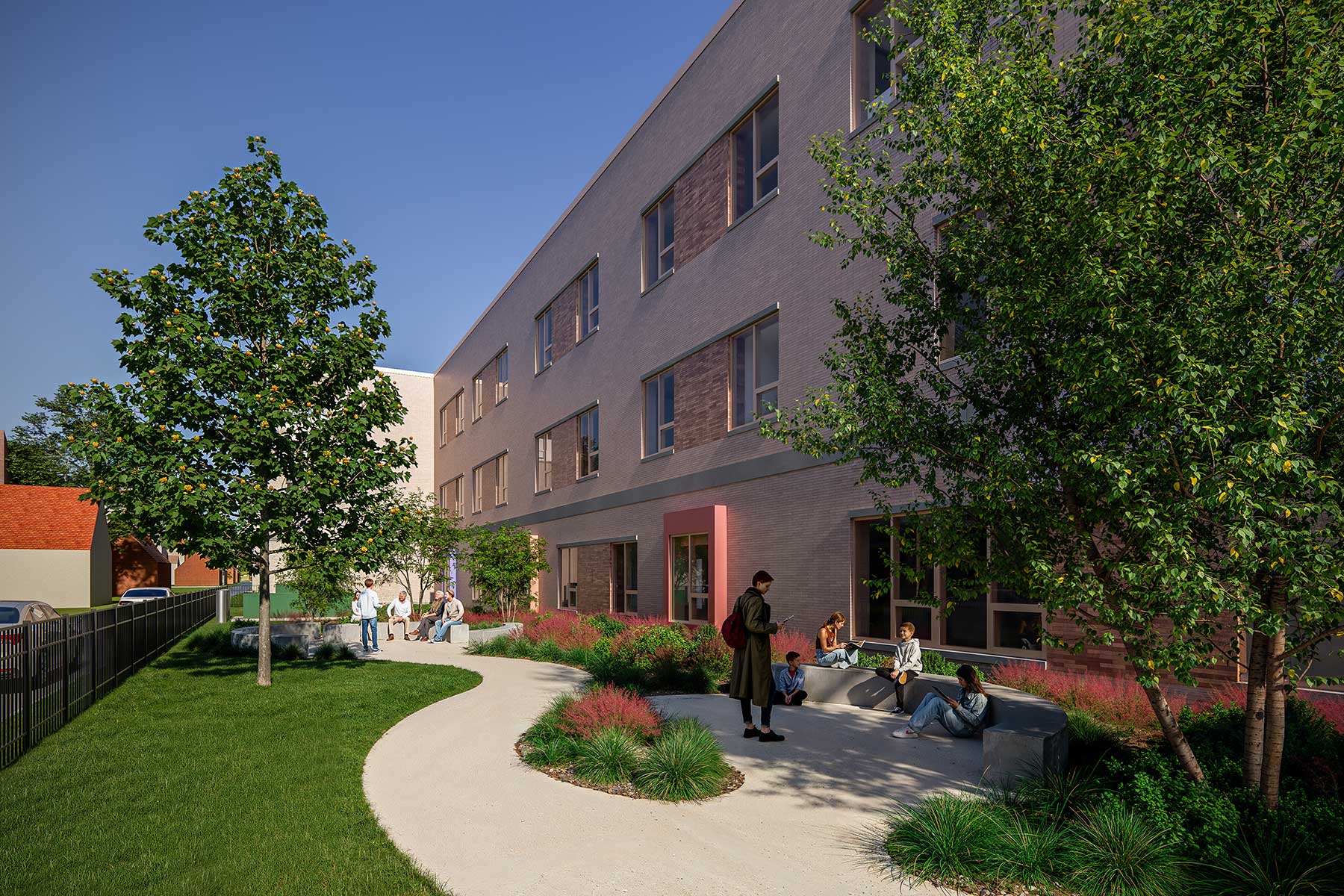
The new Beech Street school sits across from its former site, surrounded by a mix of tightly packed housing, places of worship, and small businesses. The project improves outdoor access for students while expanding the neighborhood’s green space by developing a new park on the site of the old school.
Grade-level “learning pods” allow teachers to collaborate freely.
Students are set to enjoy the flexibility of different space types to suit diverse learning styles. Each pod includes classrooms, a shared learning commons, small group rooms, and special education resource spaces.
“Having those purposeful learning environments is so important,” says Kelly Newman, Principal at Beech Street Elementary School. “The teachers are excited to have those wings for grade levels and be able to concentrate everything that students need in one area.”
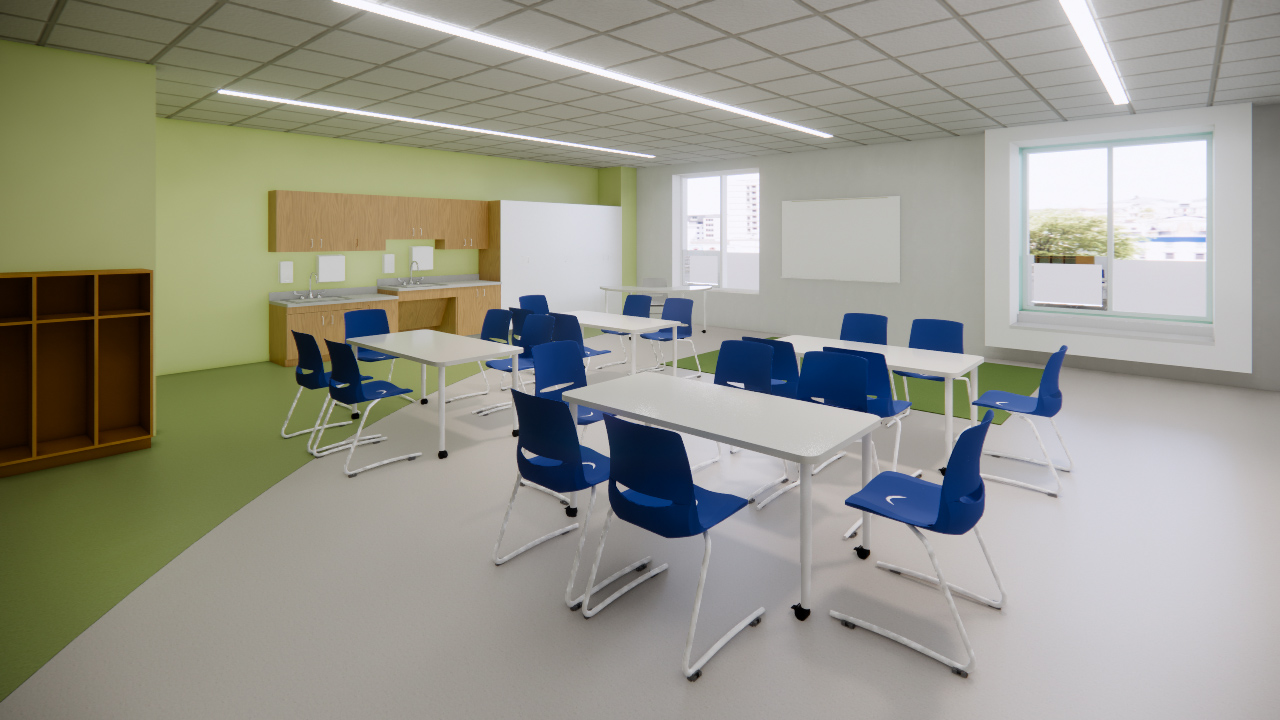
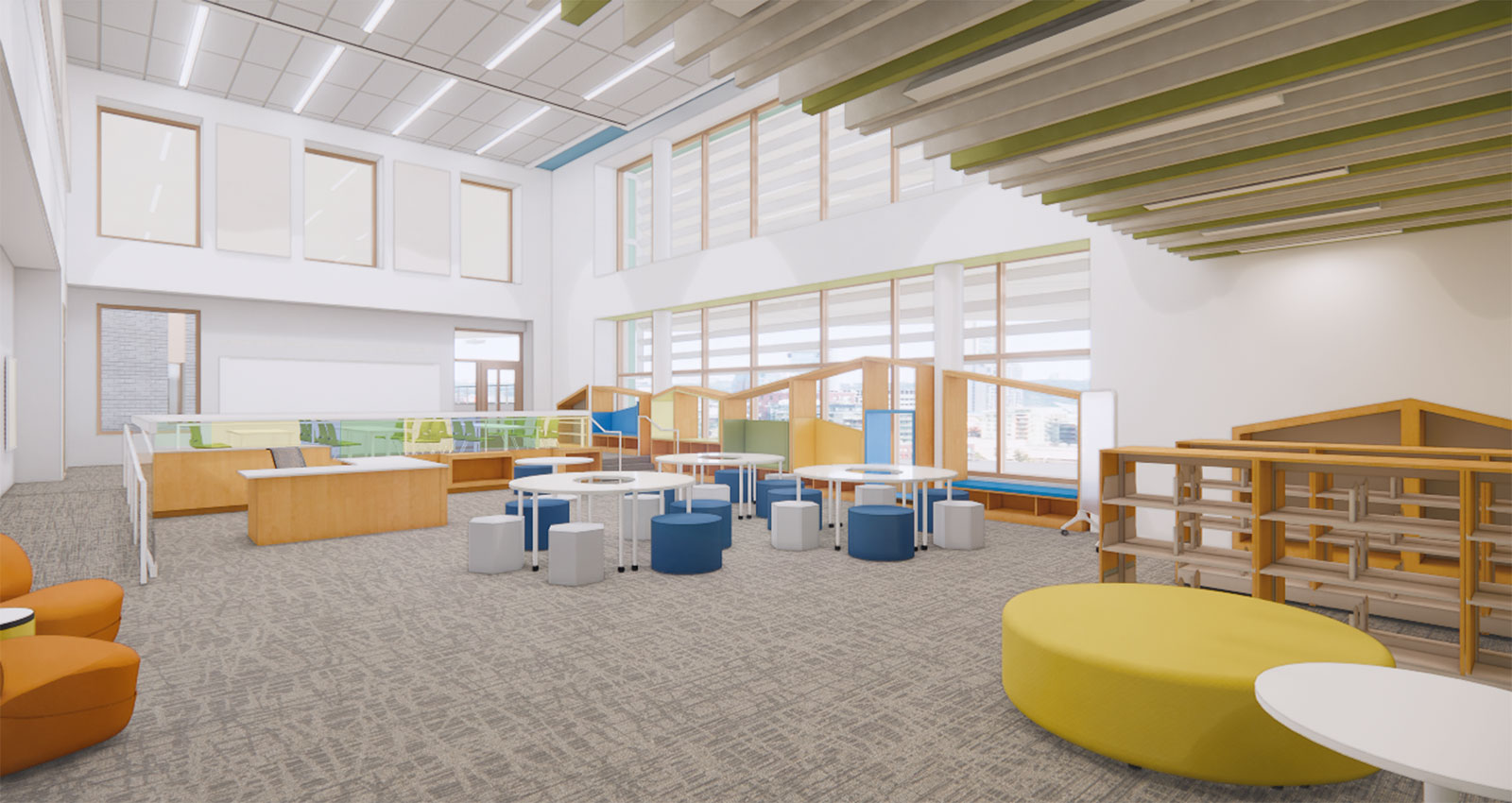
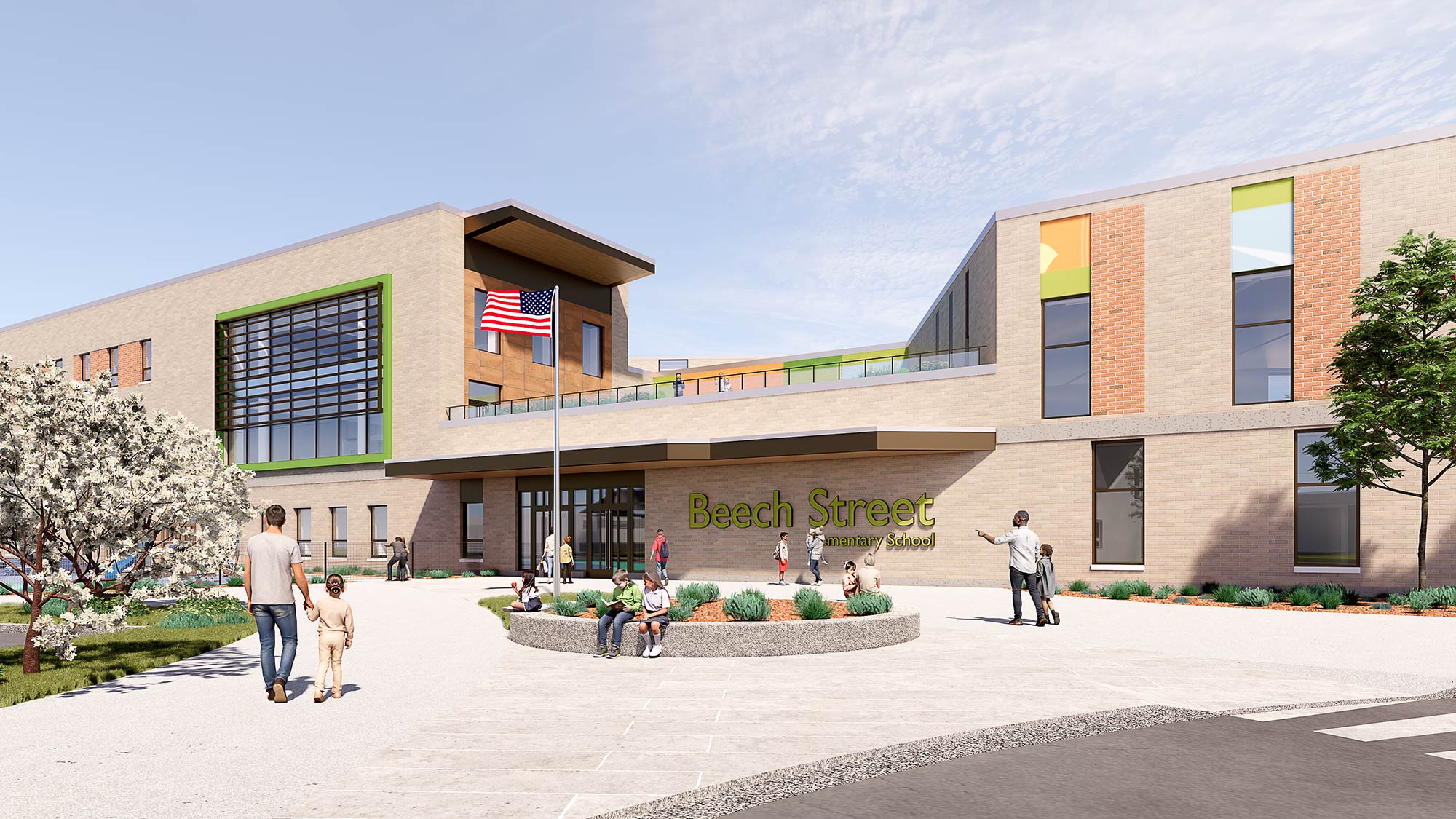
The new school prioritizes transparent views.
In contrast to the old school’s mostly windowless design, the new Beech Street offers transparent views—both to the outside and internally between classrooms, support spaces, and social hubs such as the Media Center.
Digging Deep
|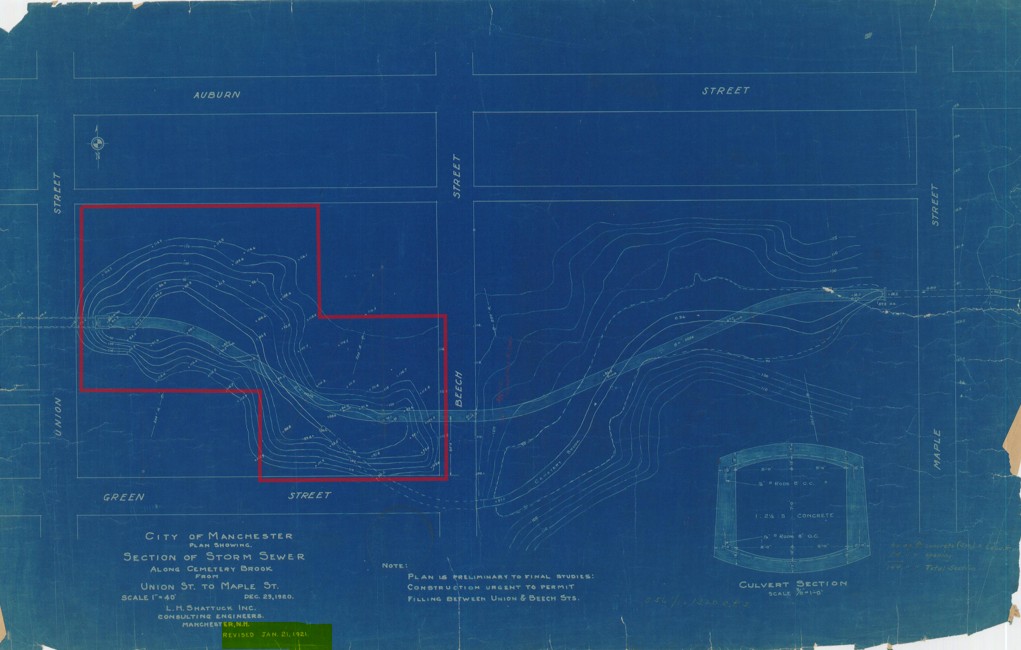
1921 storm sewer map, courtesy of the City of Manchester
The new site—a public park—had been approved in a land-swap vote in early 2025. But the project required negotiating a historic brook now hidden in a 12x12ft concrete culvert running straight through the middle of the property, 20 feet below grade.
The City was wary of building directly above the culvert, as maintenance and repair crews would struggle to access the underground structure in case of failure. In response, SMMA’s design team opted to craft the building’s geometry as a thin, curved structure that completely bypasses the brook.
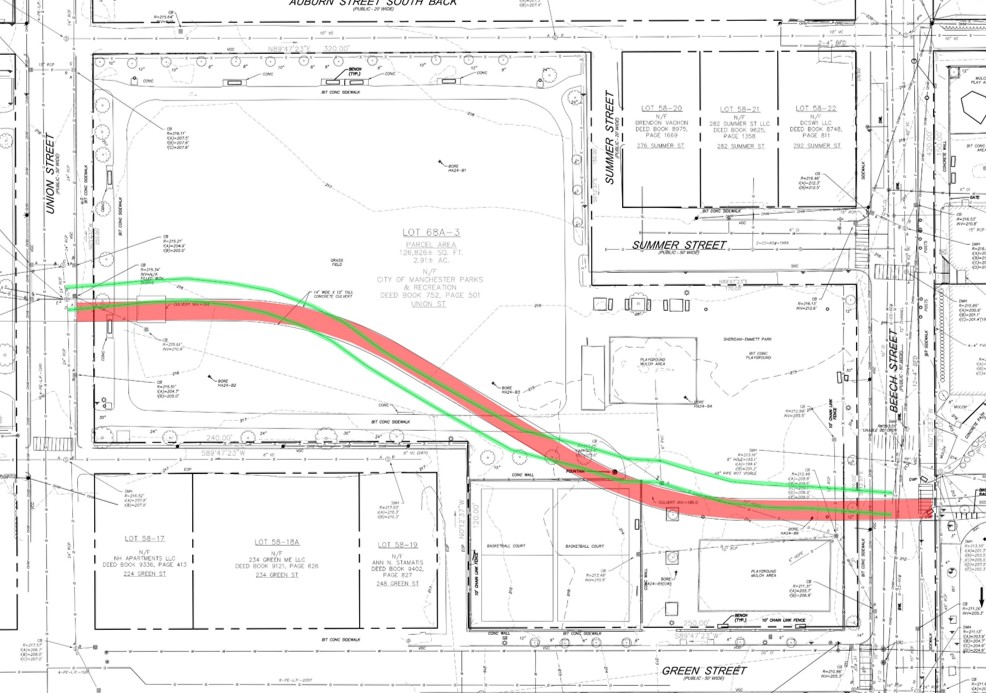
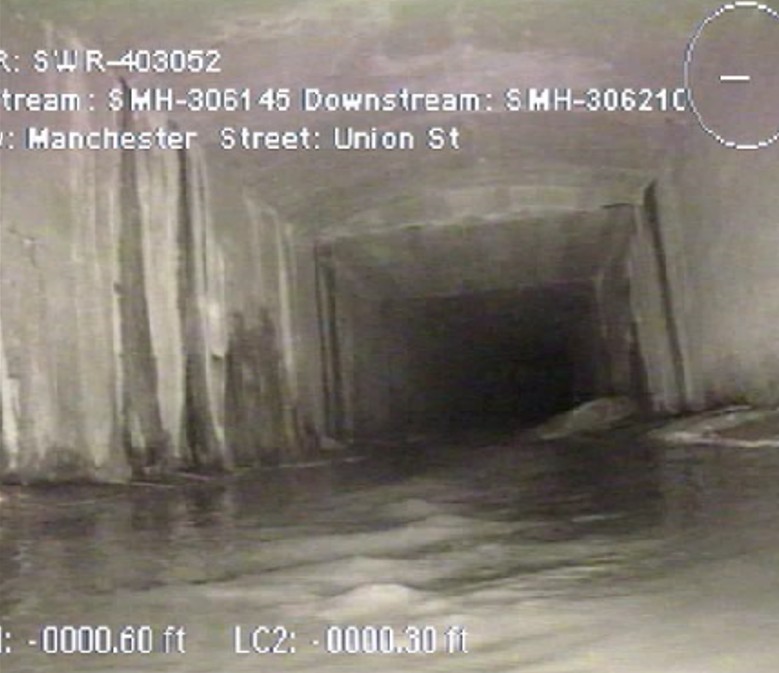
A key question remained: where precisely was the culvert? The team had little documentation to work with, aside from a hundred-year-old map showing the rough location of the culvert. Using a remote-controlled camera sent through the structure, engineers captured real-time footage and mapped its true path—revealing deviations from the historic drawings.
The final design incorporates a 15-foot buffer zone on both sides of the culvert. This will protect the structure during construction and preserve future access for city workers.
The building’s curve mirrors the path of the culvert. The design concept—“Edge of the Brook”—imagines the building’s shape as formed by the waterway, much as Manchester’s historic mill buildings were formed by the edge of the Merrimack river.

Beneath the site, poor soils prohibited the use of shallow foundations. The team found a solution by drilling deep foundations down to bedrock, using drilled shafts closer to the culvert to minimize vibration and risk to the aging structure. As a further precaution, the team installed vibration monitors to protect the culvert during construction.
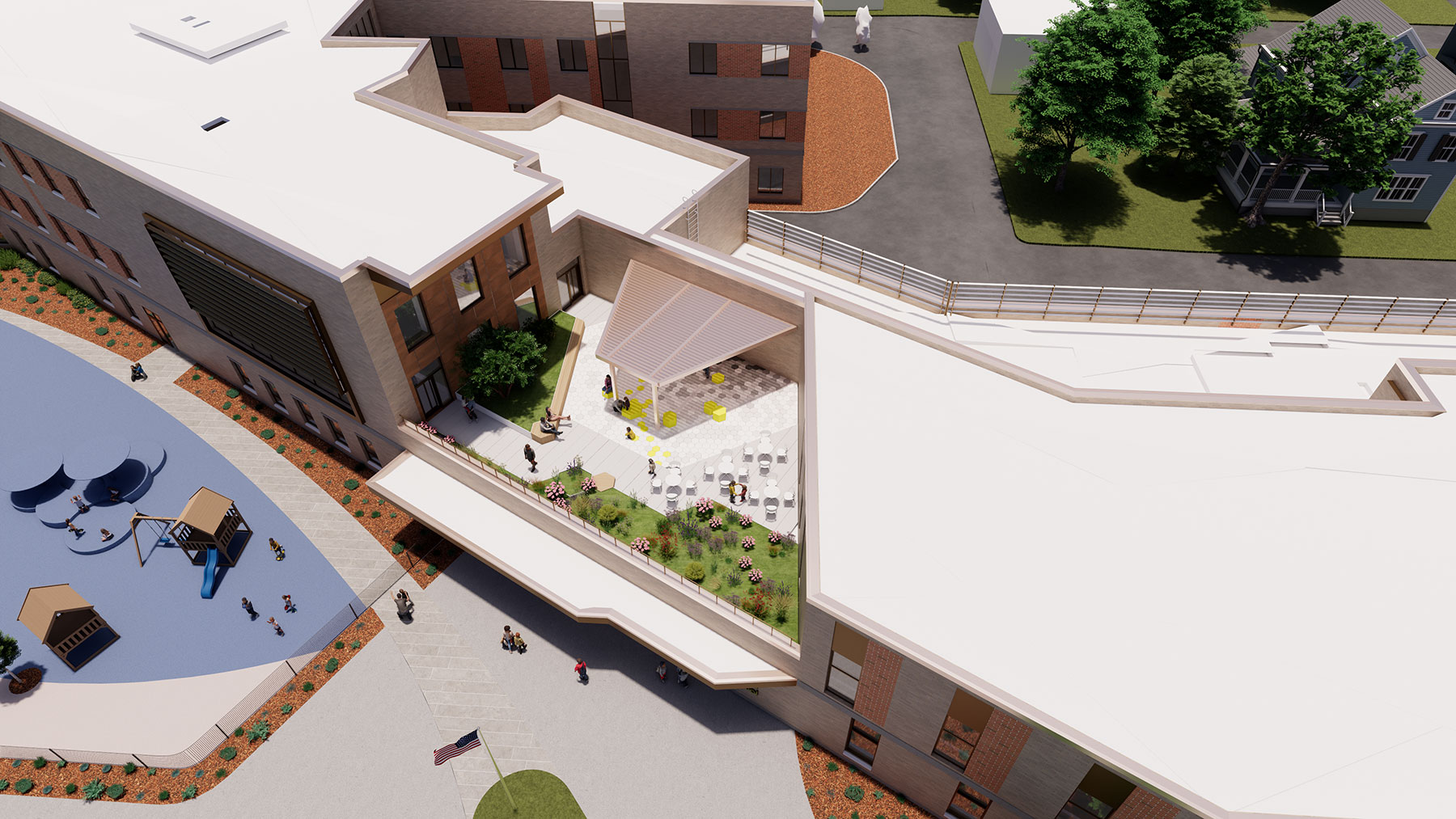
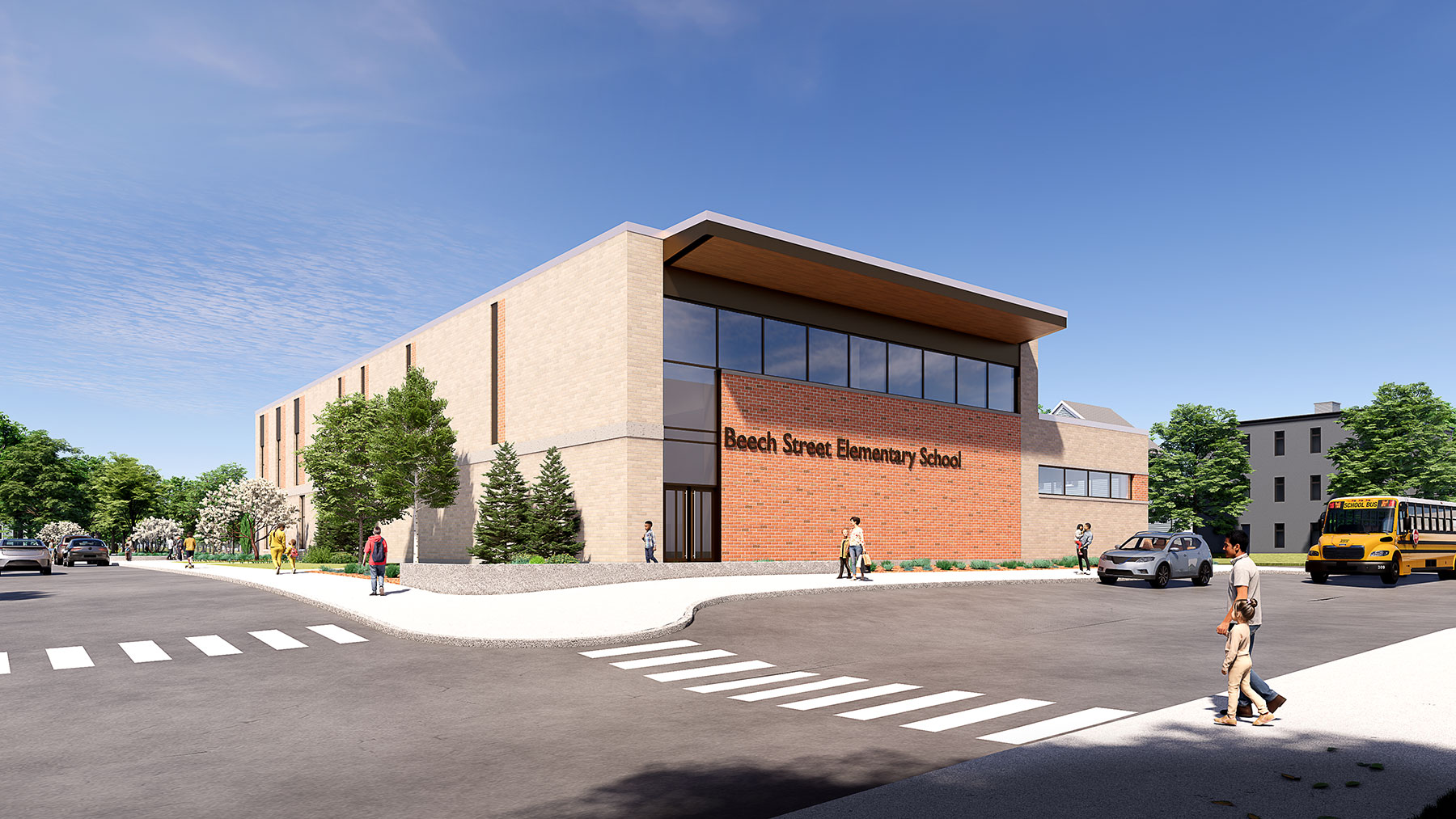
The new school is set to be a recreational draw for locals.
The building is composed of two three-story classroom wings on the quieter side of the site. By contrast, a two-story public wing with community-facing spaces is intentionally placed along Beech Street for easy after-hours access.
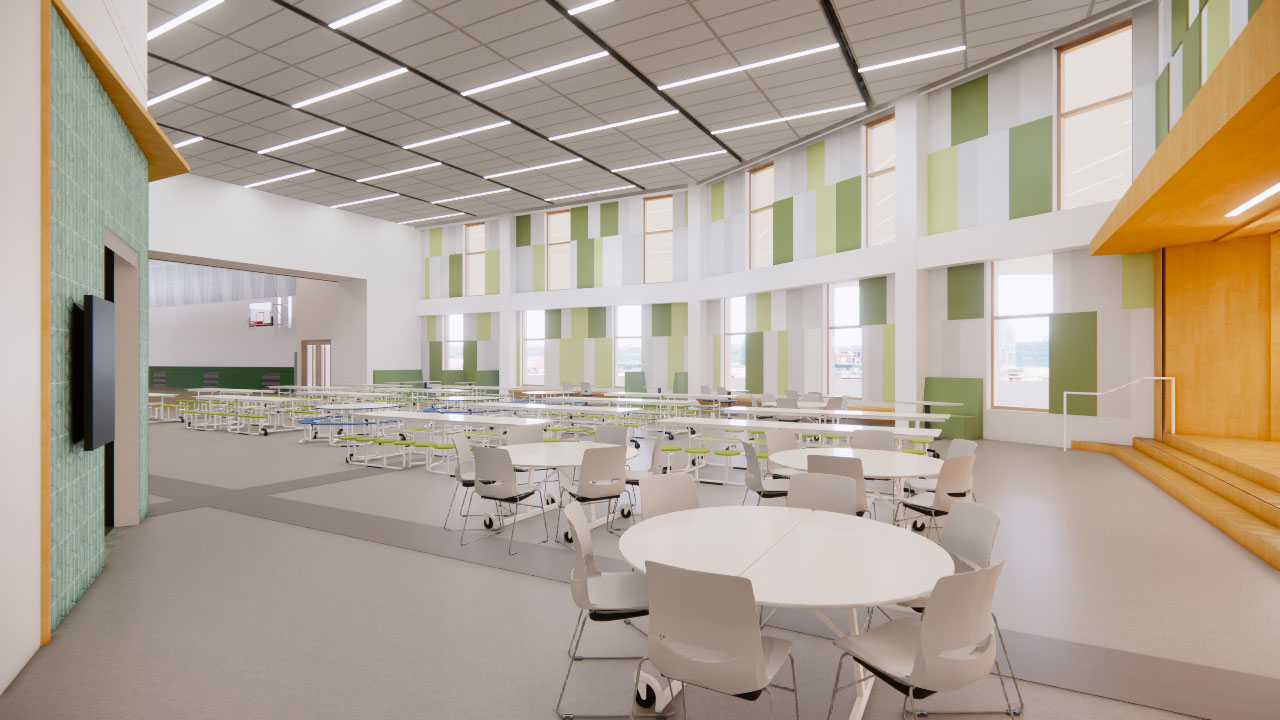
Public spaces will include an oversized gym connected to a cafetorium with small performance platform and a full-service kitchen.